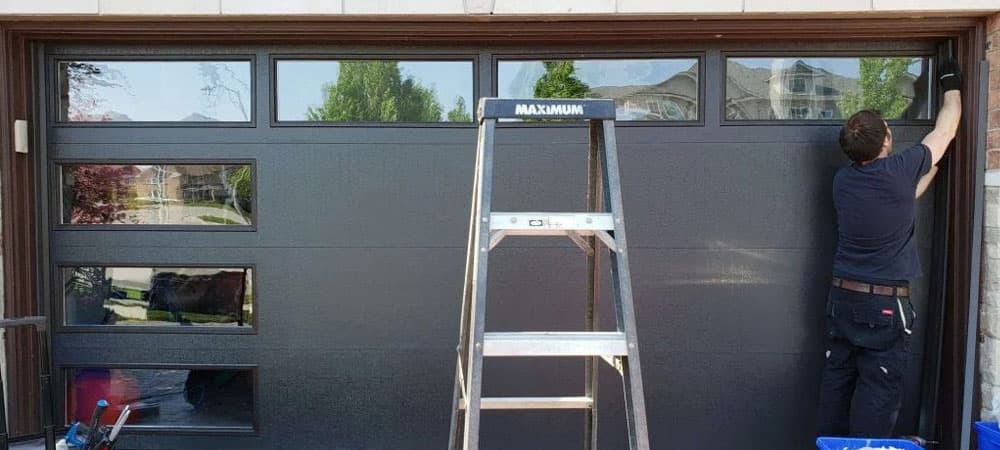
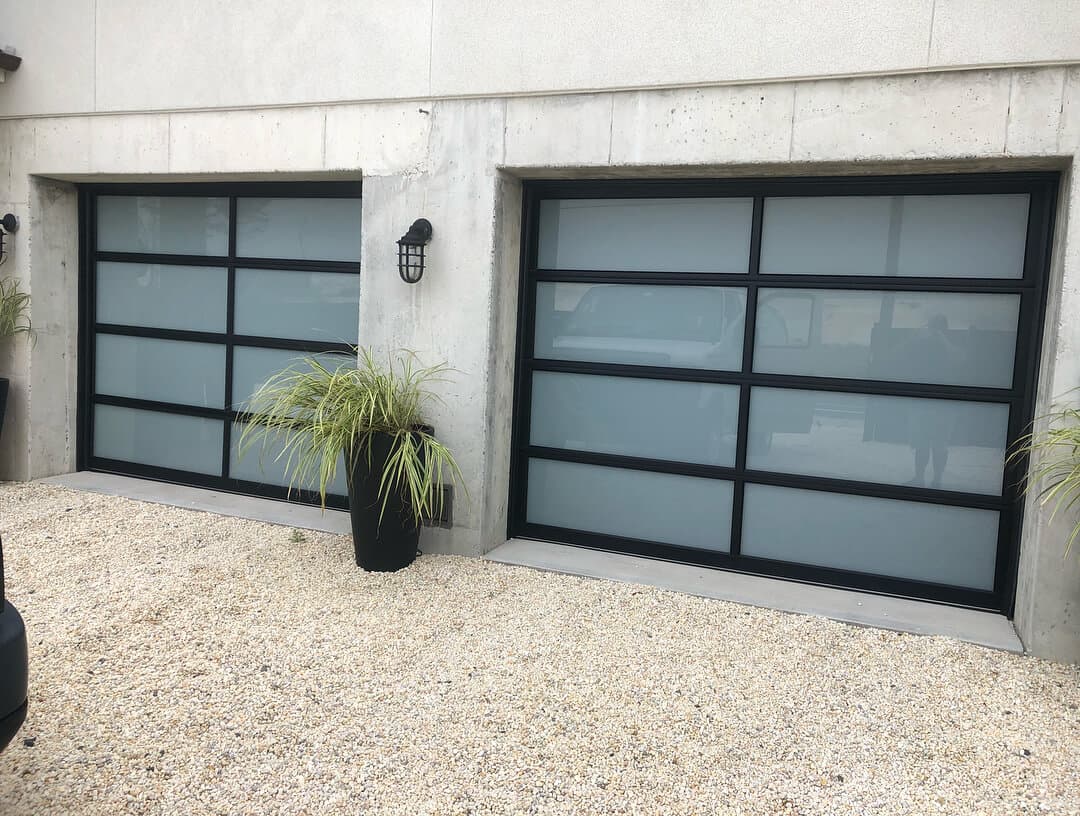
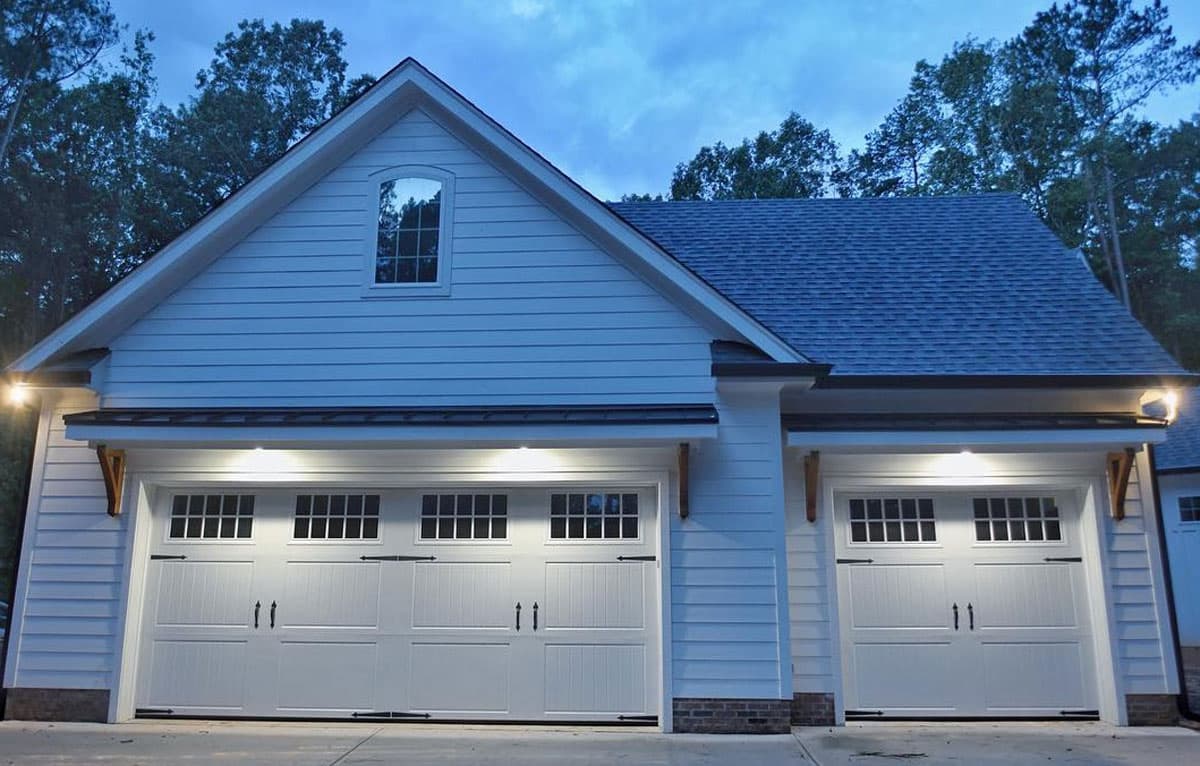
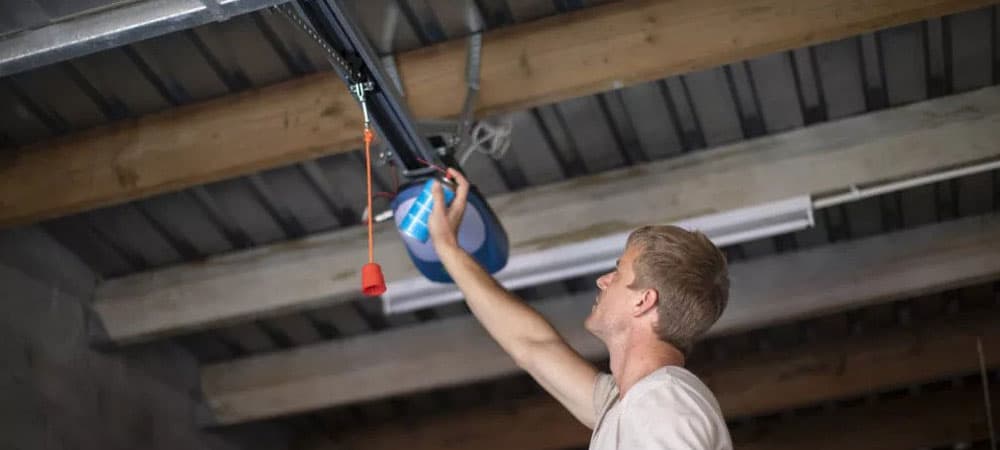
The City of London sells serviced land in four city-owned industrial parks: Huron, Innovation, Skyway and Trafalgar. A building going up on one of those lots has its overhead doors drawn before its walls, and that is the cheapest moment to get them right.
The London branch supplies, installs and services commercial sectional and rolling steel doors from 1003 Farnham Rd in Westmount, for new buildings and old ones; call (226) 270-9715. How the two door types differ is on the commercial doors page.
When to decide the door: before the steel is ordered
On a new building the door takes up space in the structure. A sectional door needs headroom above the opening for its track to turn, and backroom behind it for the horizontal run, and that space is also where sprinkler lines, lights and crane rails want to go.
A rolling steel door needs almost no backroom, but it needs room above the opening for its coil and its hood, and width at each jamb for the guides. Whichever it is, the drawings should show it before the building steel and the mechanical layout are fixed.
Three more things are cheaper to settle on paper than on site: the operator's mounting and its power, which is a line on the electrical drawings; the bollards or guards that stop a truck meeting the door frame; and the cycle count the door will run, which sizes the spring.
A loading door specified for a few cycles a day and then run all shift comes back with a broken spring in its first years. Bring the architect's door schedule, or the openings, to the branch while the design is still moving.
What machine sheds and farm shops need
Past the city limits the commercial door is usually on a farm building. Middlesex County counts 2,352 farms across 246,592 hectares, and a machine shed door is a wide, tall sectional door sized to the tallest thing that drives through it, on a building nobody heats. Uninsulated steel is common there.
What matters more is the wind: a big door on the side of an open field wants heavier struts and track than its size alone suggests, and a bottom seal that copes with a gravel apron rather than a smooth slab. The operator for those doors, and the power they need, is on commercial openers in London.
Across the southwest
The same doors go on buildings well outside the city. The branch covers garage door repair in Woodstock and garage door repair in Ingersoll east along the 401, garage door repair in Tillsonburg to the south-east, and garage doors in Sarnia about 100 km west on the 402. Each of those towns has its own building department, so a new or widened opening there goes through that municipality, not London's.
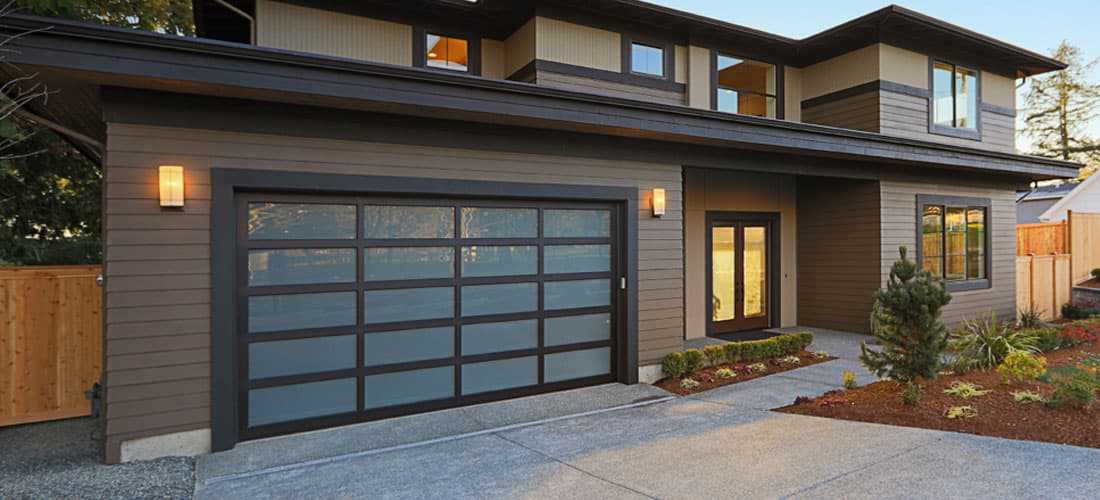
On a commercial building the trade word is overhead door, and it means the same product. Where a unit is a workshop people stand in all winter, an insulated sectional door is worth its weight; where it is cold storage for equipment, a single-skin door and a heavier spring pack are usually the better use of the budget.
Overhead doors in London, Ontario, and the loading space they open onto
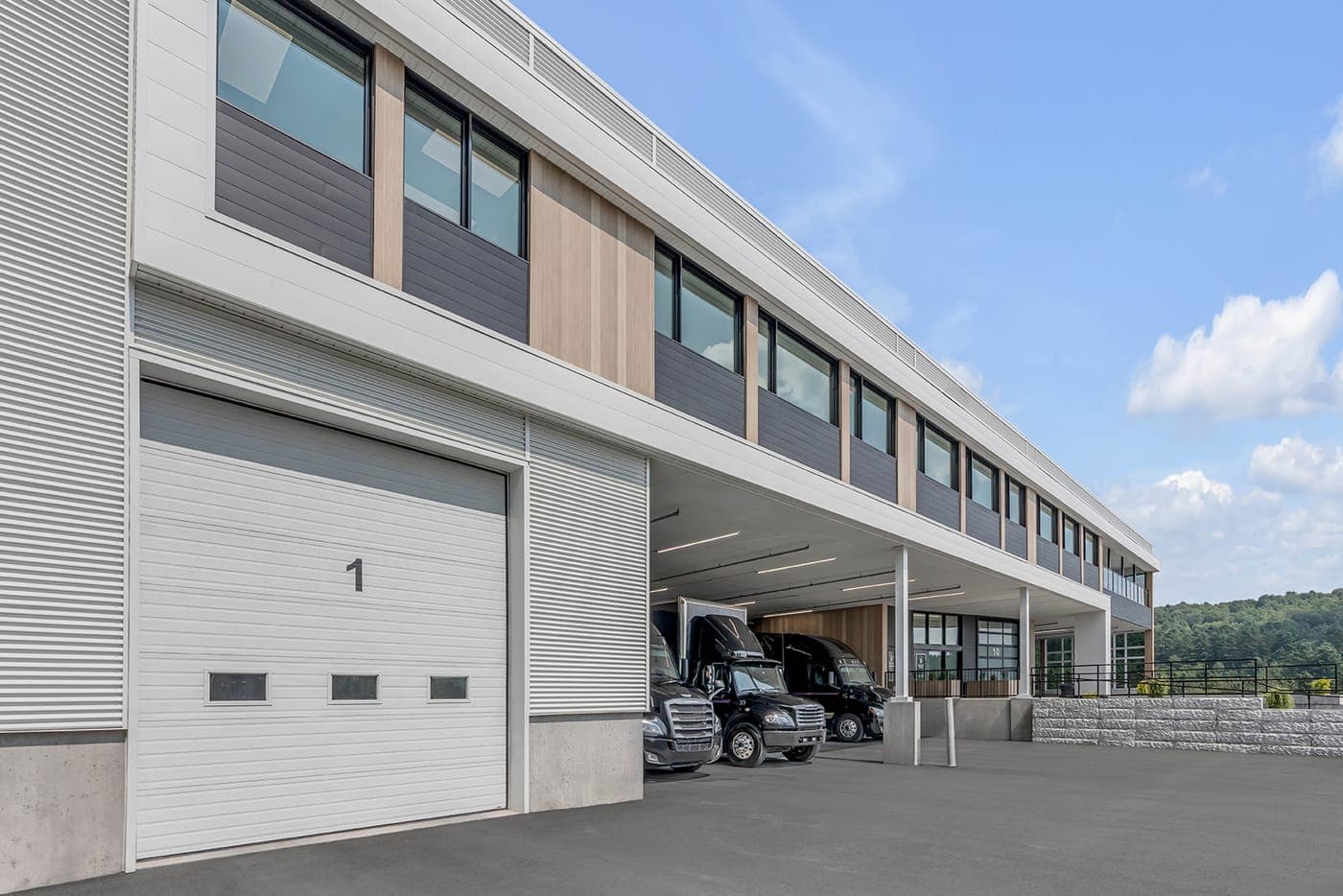
Overhead doors in London, Ontario's industrial zones open onto a loading space the City has already sized. Section 4.13 of Zoning By-law Z.-1 sets a loading space in an industrial zone at no less than 3.6 m wide and 20.0 m long, with 4.5 m of vertical clearance, and in the other zones that require one at 3.6 m by 9.0 m with 4.25 m.
Required spaces go in the side or rear yard, never on a street or a lane, and the driveway to them has to be at least 3.6 m wide.
Those are minimums for the space, not sizes for the door, but a truck that fits one has to pass through the other. The by-law writes 4.5 m as 15.0 feet, and a drive-in door well under that height at the head of an industrial bay limits what can back into it.
The door's height, the headroom its track or coil needs and the operator above it are then sized together.
Doors already in service, and the first steps
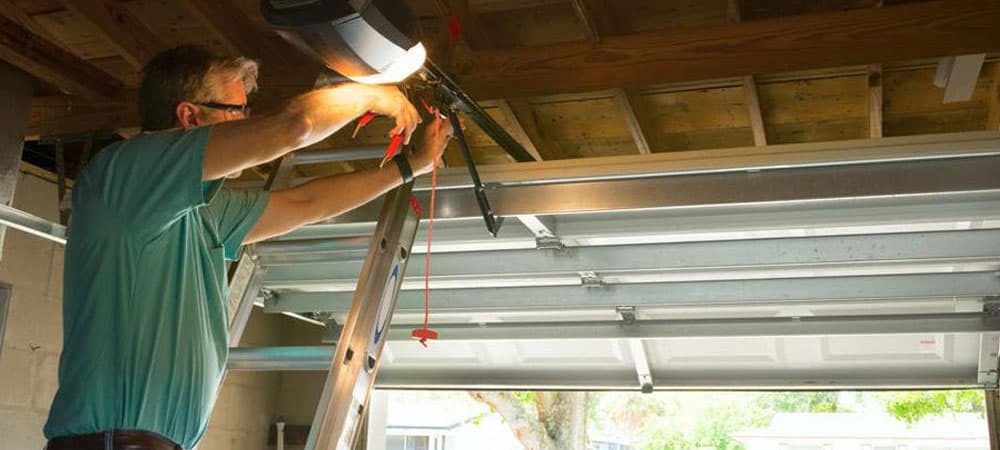
For an existing building, the job is usually a door that has been hit, a spring or cable gone on a door that runs all day, or a rolling curtain out of its guides. Lock out the operator, find out whether the door moves by hand, and call (226) 270-9715 with the door type, the size and what it is doing.
Send photos through the contact form if the job can wait for a quote.