
Insulated garage doors: what the R-value buys you in an Ottawa winter
What the number on the door measures, which foam to choose, and when the seals matter more than the insulation.
An insulated garage door is worth it when the garage shares a wall or a ceiling with heated rooms, or when you heat the garage itself. On a detached garage nobody heats, insulation buys a stiffer, quieter door rather than a warmer one.
Polyurethane insulates about twice as well per inch as polystyrene, according to Garaga. The R-value printed on the door describes one section, measured through its middle, and leaves out the joints between sections and the seals around the door.
The winter the door has to hold back
Environment and Climate Change Canada's 1991 to 2020 normals for Ottawa Macdonald-Cartier International Airport put the average January day at -10.0 °C, with an average January overnight low of -14.3 °C. A normal year has 16 nights below -20 °C and 76 days on which the temperature never climbs above zero.
The station also records 14 days a year of freezing rain or freezing drizzle, and freezing rain is what tears bottom seals.
Heating engineers boil a winter down to heating degree-days, a running tally of how far each day's mean falls below 18 °C. The same station totals 4,434 of them in a normal year. For comparison, the same 1991 to 2020 normals for Toronto Pearson, the airport in Mississauga, show a -5.0 °C January, 3,751 degree-days, 3 nights below -20 °C and between 5 and 6 freezing-rain days.
An insulated door has more winter to work against in Ottawa than in the GTA.
What an R-value on a garage door measures
R-value is resistance to heat flow. Higher is better. On a wall, the R-value of the insulation is close to the R-value of the wall. A garage door breaks that assumption, because it is several sections hinged together, running in a track, with gaps at the sides, the top and the floor.
The Door and Access Systems Manufacturers Association sets this out in its technical data sheet TDS-163, revised 2022-07-06. There are two ways to rate a door:
| Calculated door section | Tested installed door | |
|---|---|---|
| Result | R-value | U-factor |
| What is measured | One section, by arithmetic from its materials | The whole assembled door, in a test chamber |
| Includes section joints, stiles, weather seals | No | Yes |
| Test standard | None; a calculation from material data | ANSI/DASMA 105 |
DASMA's own words on the first column: it "estimates the insulating value of a door section without accounting for the complexities of door section joints, stile attachments, etc., and therefore should not be used for garage door assemblies." It adds that the two numbers "are not comparable" and that "U-factor and R-value are not reciprocals of each other." So you cannot divide one into the other to convert.
In practice, the big number on a brochure or a shopping listing is almost always the calculated section figure. Ottawa's shopping carousel for this search on 2026-09-15 led with a door advertised at 12.9 R-value. That figure is useful for comparing one maker's R-16 with another maker's R-12.
It tells you nothing about how much air gets past the bottom seal, and a U-factor from an ANSI/DASMA 105 test is the better number where a manufacturer publishes one.
Which insulated door is best is that question, with one number from HomeStars, the Canadian home services review site, to anchor it: doors run from no insulation up to about R-18, and R-12 or better is its target for an attached garage in most of the country.
Polyurethane or polystyrene
These two foams go into almost every insulated steel door.
Polystyrene comes as a rigid board cut to fit inside the section. Garaga describes it as panels "inserted into garage doors" that "cannot be an exact fit." Polyurethane is injected as a liquid, expands to fill the section and bonds to both steel skins.
Garaga puts its thermal resistance per inch at twice that of polystyrene, and because it glues the two skins together, the section becomes stiffer and harder to dent.
Garaga's current residential range shows the split. The Classic CC lists five builds: 3 layers polyurethane R-16, 3 layers polyurethane R-12, 3 layers polystyrene, 2 layers polystyrene, and non-insulated. The Princeton P-11 is sold only as 3 layers polyurethane R-16, at a listed thickness of 2 3/8 inches.
The Village collection comes only in polystyrene, two or three layers. Garaga publishes no R-value for its polystyrene builds on those model pages, so this page does not assign one.
"Layers" is the other half of the specification. A 2-layer door is a steel skin with insulation stuck to its back, and the foam faces the inside of the garage. A 3-layer door sandwiches the foam between two steel skins.
The inside skin protects the foam, does structural work, and gives you a clean wall of steel instead of exposed board. More detail on the three constructions is on our garage doors page.
Polyurethane and a second skin add weight. The springs are sized to the door they will lift, so a heavier door gets its own springs, and the opener is checked against the new weight.
How the opener makers rate lift power for a heavier door, and whether a room above the garage calls for a quieter drive, is set out in the guide to choosing a belt vs chain garage door opener.
Attached garage, detached garage, or a room above it
Where the garage sits decides more than the foam does.
Attached garage
The wall between the garage and the house is part of the house's shell. Natural Resources Canada's Keeping the Heat In says "the walls, ceiling and door adjoining the house must be insulated and air sealed to reduce heat loss and prevent garage fumes from entering the house."
An insulated overhead door keeps the garage from dropping to the outdoor temperature, which lowers the temperature difference across that shared wall. Garaga's guidance for an attached garage is a door of at least R-10, rising to at least R-12 when the garage itself is insulated.
A room above the garage
NRCan calls this a bonus room, and its guidance puts the work in the floor of that room, which is the real boundary between heated and unheated space. A better garage door helps a poorly insulated floor, because a warmer garage pulls less heat out of the room above.
Once that floor is insulated and air sealed, the door makes far less difference to the bedroom, so the floor comes first. A belt-drive opener is also worth having under a bedroom, for the noise.
Detached and unheated
Insulation will not make it warm. Garaga's own advice is that a lightly insulated or non-insulated door is enough when the garage is detached, unheated and only used for parking. People still buy a 3-layer door here for dent resistance and a quieter run, which is a fair reason to spend the money.
Heated garage or workshop
Garaga recommends at least R-12 for an insulated garage heated to 8 to 10 °C, and R-16 for a workshop or home gym. A garage held that warm loses a lot of its heat through the seals, however good the foam is.
Weather seals: the leak insulation does not fix
A closed garage door has four edges and a joint between every pair of sections. Garaga's R-value FAQ puts it directly: the thermal resistance value "doesn't mean much if the door isn't equipped with effective thermal breaks and suitable weatherstripping."
DASMA's data sheet lists weather seals and thermal breaks as the parts of an assembled door that resist heat flow, and section joints and stiles as the parts that can short-circuit it.
The bottom seal is a flexible rubber or vinyl strip in a retainer at the base of the door. It closes the gap against a floor that is rarely level. Between the sections, a seal lets each joint close onto something soft.
Perimeter weatherstripping on the jambs and the header presses against the face of the door, and Garaga's checklist asks whether it stays soft and flexible at -25 °C; in a normal Ottawa year, 16 nights drop below -20 °C. A thermal break at the section ends stops steel on the outside connecting directly to steel on the inside.
Ottawa is hard on the bottom seal in particular. Fourteen days a year of freezing rain or drizzle, meltwater running under the door and refreezing, and road salt carried in on the car all attack that strip and its retainer. A bottom seal frozen to the slab gets torn when the opener pulls the door up. Once the retainer has rusted, there is nothing left to hold a new seal.
So before paying for an R-16 door, look at the floor line of the current one on a sunny afternoon with the garage lights off. Daylight along the bottom or up the sides is air moving, and a new seal is a far smaller job than a new door.
Seals, retainers and the other wear parts are on our garage door parts page, and the weather stripping guide shows how to tell which seal you have.
When an insulated door is not worth the extra cost
When the garage is detached, unheated and used for parking. Buy for strength if you like, not for heat.
When the garage walls and ceiling are uninsulated. Heat leaves through them faster than through any door you can buy.
When the real leak is the seals. Replace them and see what changes before replacing the door.
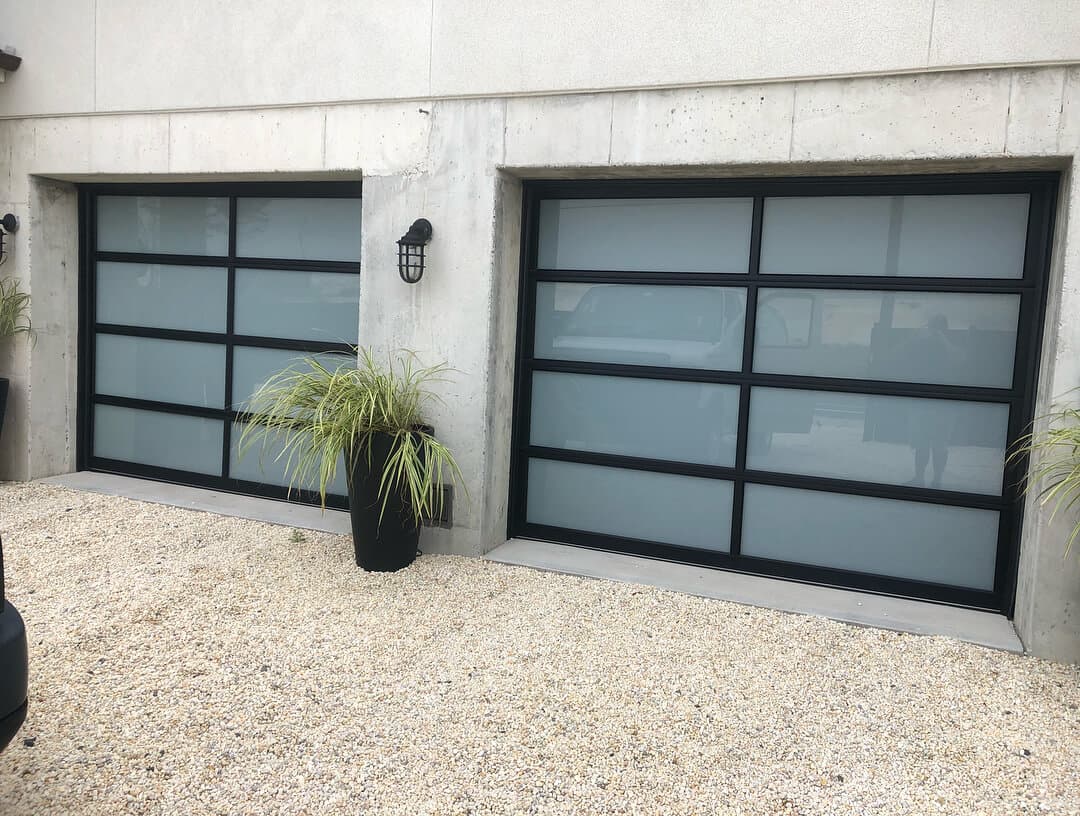
When you want a full-view glass door. Glass and aluminium insulate less than an insulated steel section. Garaga's own commercial G-4400 full-view door is non-insulated and says it "should not be used for insulation properties."
When the door is otherwise sound, and the only complaint is a cold garage in January. A heater, a seal kit or insulating the walls may do more for the money.
When the answer is a new door, the garage door replacement page covers when replacing beats repairing, and what carries over from the old door.
Talk to the Ottawa branch
Protech Garage Doors is a Garaga dealer and also installs Amarr and Stanley doors. Call the Ottawa branch at (613) 845-9950, or send the contact form, with the size of the opening, whether the garage is attached, and whether it is heated or has a room above it.
Every new door is quoted from a measurement of the opening, and the installation page explains what that measurement looks for. You can also walk in and look at doors at the showroom at 46 Grenfell Crescent, Unit A.
Questions people ask
Short answers to what comes up most often.
Is it worth buying an insulated garage door?
For an attached garage, a garage with a room above it, or a garage you heat, yes. Garaga recommends at least R-10 for an attached garage and at least R-12 for a heated one. For a detached garage nobody heats, insulation will not make it noticeably warmer, though a 3-layer insulated door is stiffer, quieter and harder to dent than a single steel skin.
Check the seals first either way: Garaga’s own FAQ says good insulation gains little when the weatherproofing fails.
What is the average cost of an insulated garage door?
No average is honest enough to publish. The price moves with the width and height of the opening, polyurethane against polystyrene, 2 layers against 3, the panel design, windows, and whether the springs and opener have to change to suit a heavier door.
When comparing a retail listing with a quote, check whether removal of the old door, track, springs and installation are included. The way to a real number is a measurement of the opening and a quote on specific models.
What type of garage door has the best insulation?
A 3-layer steel door with injected polyurethane between the skins. Garaga rates polyurethane at twice the thermal resistance per inch of polystyrene, and its highest residential rating is R-16, on 3-layer polyurethane builds. Compare doors by the same method, though: a calculated section R-value from one maker and a tested whole-door U-factor from another cannot be compared, according to DASMA.
And the best section in the catalogue still depends on good bottom, perimeter and section seals.
What is the average price of a 12x12 insulated garage door?
A 12-foot-high door is an RV, workshop or commercial opening, taller than the 7 or 8 foot doors on most houses, and there is no reliable average for one. At that size the door is often specified from commercial ranges, the springs, track and opener are sized to a much heavier door, and headroom inside the building decides what fits.
Measure the opening and the headroom, decide whether the space will be heated, and price specific doors from there.
Does a garage door's R-value include the weather seals?
No. A calculated R-value covers the middle of one section only. DASMA states that this figure does not account for section joints or stile attachments, and that weather seals and thermal breaks show up only in a tested U-factor for the whole installed door.
Where to go from here
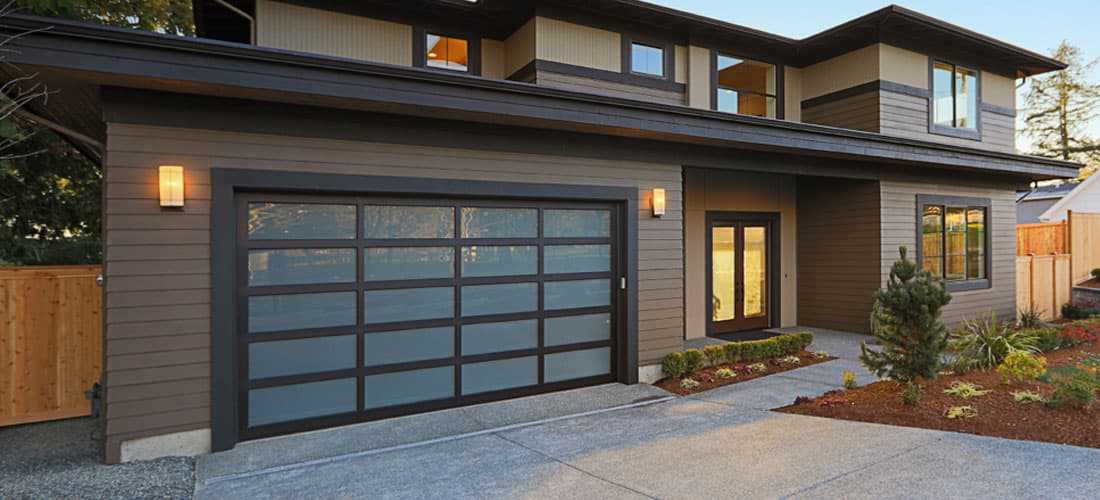
Garage doors
Steel, aluminium and glass, wood and composite garage doors from Garaga, Amarr and Stanley. What the material, the layers and the insulation actually change.
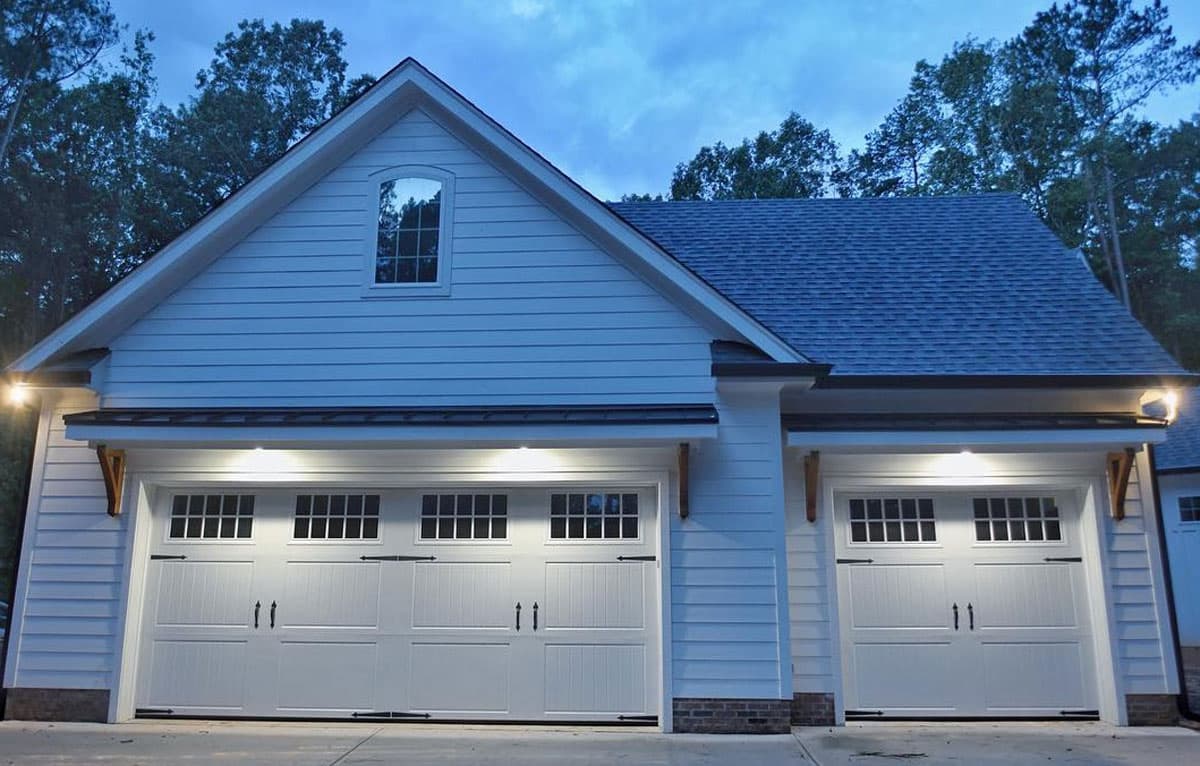
Garage door replacement
Panel damage, rust at the bottom section, repeated failures and an uninsulated door on a heated garage. The four cases where replacing beats another repair.
Garage door installation
Headroom, backroom and track type decide which doors will fit an opening. What an installation involves, and why the springs are sized to the new door.
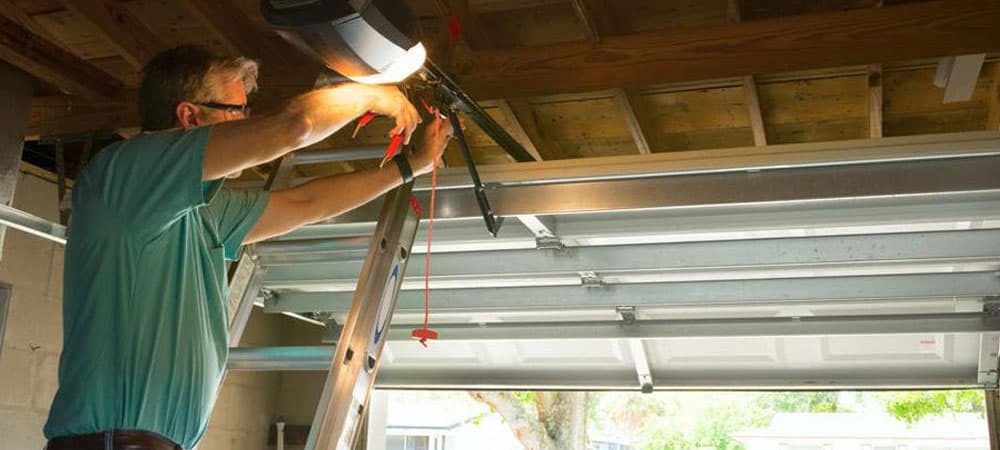
Garage door parts
Springs, cables, drums, rollers, hinges, brackets, seals and opener parts. What is on the truck, what is matched to the door, and what is not a DIY part.
Talk to Protech Garage Doors today
Call (613) 845-9950 at any hour, or email info@protechgarage.ca for a new-door quote with no rush.