
Garage door installation in London, Ontario
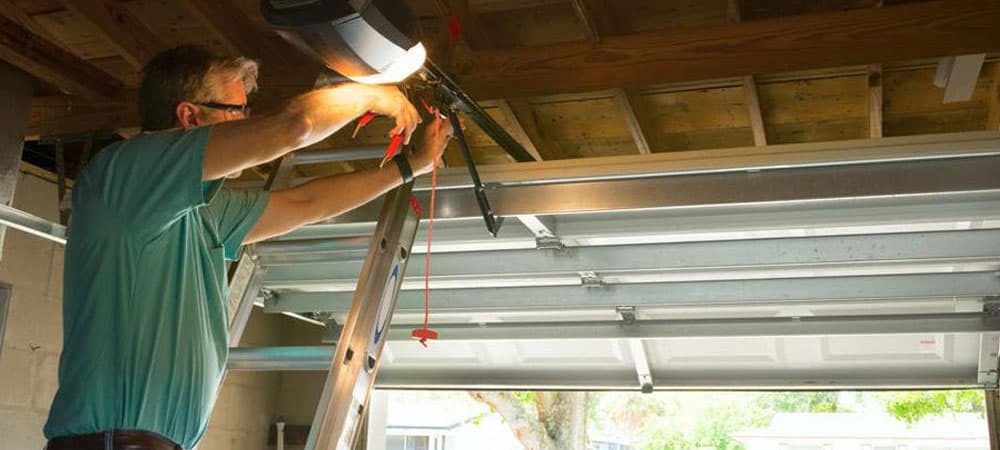
Installing a garage door in London, Ontario is the job on the installation page, done on a slab that spends four months under snow. The London branch fits doors from Garaga, Amarr and Stanley and openers from LiftMaster, Chamberlain and Genie. Send the contact form for a quote, or email info@protechgarage.ca.
The floor is the London problem
Environment Canada's normals for 1991 to 2020 at the London airport station give a January daily average of minus 5.4 degrees, 10 cm of snow on the ground at the end of January and 7 cm at the end of February, and an extreme minimum of minus 29.1.
Snow sits against a London garage door for the length of the winter instead of arriving and leaving, and meltwater runs back toward the slab every time the sun comes out.
The bottom seal is the part of an installation that meets that. It is a rubber astragal in an aluminium retainer along the bottom section, and it is specified for the floor it lands on. A flat slab takes a standard profile.
A slab that has heaved or sunk along the door line takes a deeper bulb, or a threshold strip glued to the concrete so the seal has something level to close onto, and the threshold also stops meltwater running under the door, which is what freezes a seal into the floor in the first place.
The wall stands open while the old door comes out and the new one goes up, so a winter fit is booked with the forecast in front of it.
Heated or unheated: the perimeter changes with it
The garage doors page covers the insulation inside the door. The installation decision is about the edges.
On an attached garage that shares a wall with the house, and on any garage with a heater in it, the weatherstripping on the jambs and header is fitted tight to the door face and the bottom seal closes on the threshold with no daylight, because the door is now the coldest wall of a heated room.
On a detached garage on its own slab the risk runs the other way: the seal freezes to the concrete. A threshold under it and a silicone spray on the rubber before the snow are the two things that stop that, and both are install-day items.
The openings behind London's older streets
London has 39,135 dwellings built in 1960 or before, and a great many have a detached garage at the back that arrived after the house. In Wortley Village and Old South the streets were finished before the Second World War; in the Bishop Hellmuth district the houses are Queen Anne Revival brick from before the First World War.
The garage behind one is narrower and lower than any opening a subdivision builder would draw. That is the low-headroom case from the installation page, and the measurement is the quote.
Permits: the City, and the heritage districts
The City of London's building permit page lists replacing an existing door with one of the same size as work that needs no permit, and adding a door or enlarging an opening as work that does; a detached garage is on the permit list. A like-for-like garage door in the same opening is fitted without one.
Widening a single to a double, or cutting a door into a garage that never had one, goes through the Building Division at 300 Dufferin Avenue first. Anywhere between those two, ask the City about that address before the door is ordered.
The heritage districts add a second office. Wortley Village-Old South, about 1,030 properties designated in 2015, and Bishop Hellmuth, north of Oxford Street, both sit under Part V of the Ontario Heritage Act.
The Wortley Village plan is specific: a street-facing door replaced in the same style, material, size and shape needs no Heritage Alteration Permit, and neither does anything not visible from the street, while a street-facing door of a different style, material or proportion does. A laneway garage behind the house is outside that.
A garage facing the street in either district is not, so ask the City's heritage planners about that address.
Booking an installation with the London branch
Send the contact form with the street, the width and height of the opening, whether the garage is attached or detached and heated or not, or email info@protechgarage.ca. The quote follows a measurement of the opening, which is when the slab, the driveway grade and the headroom get looked at. New doors and openers go in together where the old unit is not worth carrying over.
Everything we do in London · Garage door installation: what the job involves
London branch
- London
- The van leaves from
- 1003 Farnham Rd, London, ON, N6K 1S3
- Phone
- Hours
- Open 24 hours, seven days
- Brands installed and serviced
- Garaga, Amarr, Stanley, LiftMaster, Chamberlain, Genie
Related services in London
Everything else we repair and install
Every one below has a page of its own, written the same way this one was.
Emergency garage door repair in London, Ontario
Emergency garage door repair for a door stuck open, a snapped spring or cable, or a door off its track. What to do before the call, and what to leave alone.
Garage door spring repair in London, Ontario
Broken garage door springs? We replace torsion and extension springs safely and professionally to get your garage door working properly again.
Garage door safety sensor repair in London, Ontario
Garage door sensor repair: the door starts down and reverses, or the opener light blinks. What the photo eyes are telling you, and when it is only alignment.
Garage door off track in London, Ontario
Garage door off track or not moving properly? Protech can safely realign the door, repair damaged tracks, replace rollers and get it running smoothly again.
Garage door parts in London, Ontario
Springs, cables, drums, rollers, hinges, brackets, seals and opener parts. What is on the truck, what is matched to the door, and what is not a DIY part.
Stuck garage door in London, Ontario
A door that will not move, or stops halfway. The check order that tells you whether it is the opener, the springs, the track or ice, before anyone touches it.
Garage door problems in London, Ontario
Match the symptom to the cause: a bang and a heavy door, a crooked door, a door that reverses, an opener that hums. Then go to the page that covers that fault.
Garage doors in London, Ontario
Steel, aluminium and glass, wood and composite garage doors from Garaga, Amarr and Stanley. What the material, the layers and the insulation actually change.
Garage door replacement in London, Ontario
Panel damage, rust at the bottom section, repeated failures and an uninsulated door on a heated garage. The four cases where replacing beats another repair.
Asked before booking garage door installation
Answered for London, on the number this branch answers.
Why is the floor the thing you keep asking about?
Because London snow sits against the door for the length of the winter instead of arriving and leaving. The airport station records a January daily average of minus 5.4, 10 cm of snow on the ground at the end of January and 7 cm at the end of February, so meltwater runs back toward the slab every time the sun comes out and the seal is what meets it.
My slab has heaved along the door line. Can that still seal?
Yes, and the profile is chosen from the gap rather than guessed. Measure it: close the door, then check the daylight at both corners and the middle with a tape, because it is the difference between the three that decides whether a deeper bulb is enough or a threshold is wanted.
Say those three numbers when you ask. A slab still moving year on year is a different conversation, and a new seal every winter is the wrong answer to it.
Heated garage or unheated: does the edge detail change?
It reverses. On an attached garage, or any garage with a heater, the jamb and header weatherstripping is fitted tight to the door face and the bottom seal closes on the threshold with no daylight, because the door is now the coldest wall of a heated room.
On a detached garage the risk runs the other way and the seal freezes to the concrete: a threshold under it and a silicone spray before the snow are the two install-day answers.
Talk to Protech Garage Doors today
Call (226) 270-9715 at any hour, or email info@protechgarage.ca for a new-door quote with no rush.