
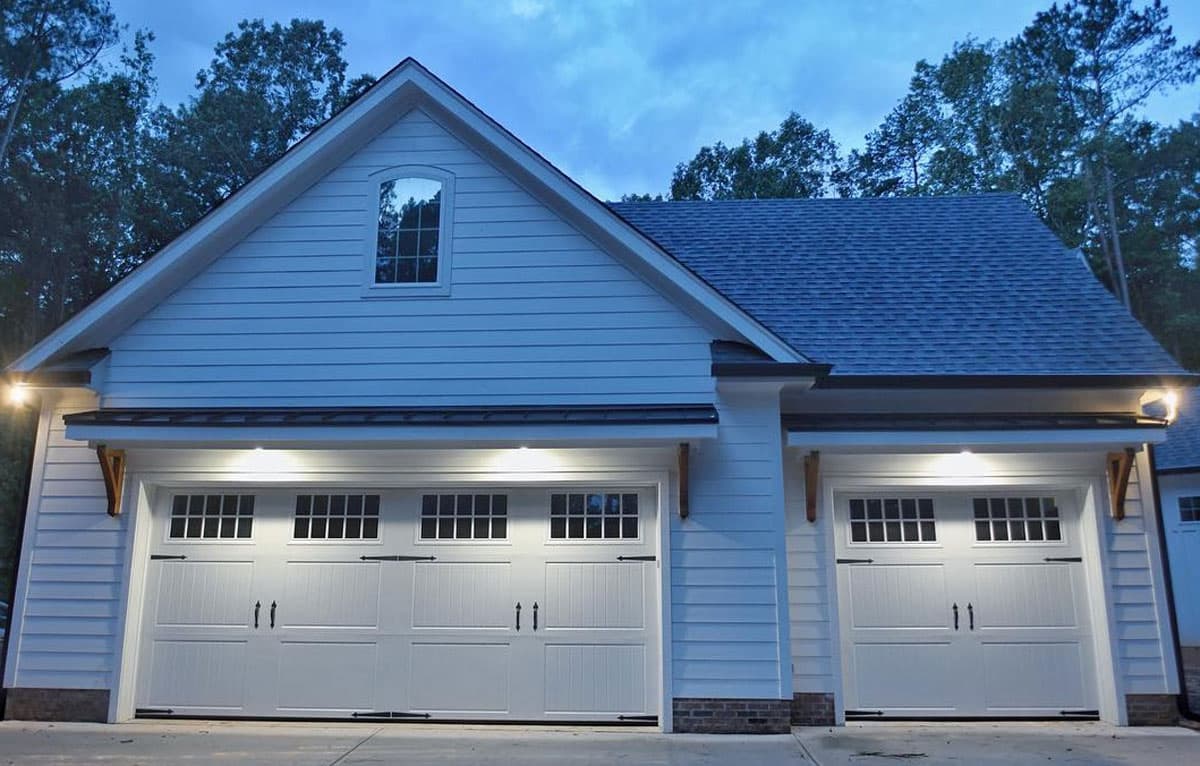
Garage door guides
What to check, what to buy and when to call, for doors that have to work through an Ontario winter.
Thirteen guides so far, all written for a door that has to work through an Ontario winter rather than for a showroom floor.
They answer the questions that come up before anybody books anything: what size door the opening in your wall will actually take, whether an insulated door is worth what it costs on this particular garage, which of the seals on a door is the one letting the weather in, how long the springs that lift it can be expected to last, what to do the day a cable lets go, and whether a door that has failed is worth repairing at all.
The newest two are about the opener above it: whether it should run on a belt or a chain, and what to check when it stops working. The last one is for a door that still works: what to test, oil and clean through the year to keep it that way.
And one is for the day the power goes out: how to open the door by hand and hand it back to the opener. Another compares the makers: what Garaga and Amarr each publish about the doors they build. One is about the look: flush, grooved and full-view glass doors.
The newest is about the windows in an ordinary door: where they go and which glass to choose.
Standard garage door sizes is the one to read first, because the size is the thing every other decision hangs off.
It covers what a single and a double actually measure, why the sizes a distributor stocks are not the sizes a factory can build, and the three clearances that decide whether a door fits at all: the headroom above the opening, the side room beside it, and the depth behind it.
It also carries the measuring rule people most often get wrong, which is to measure the opening in the wall and never the door already hanging in it.
Insulated garage doors is the one to read before ordering a replacement. It covers what the R-value printed on a door actually measures, why it cannot be compared with a U-factor, what polyurethane buys over polystyrene, and the case where the seals around the door matter more than the foam inside it.
It is written against Ottawa numbers: a January that averages minus 10 and 4,434 heating degree-days in a normal year.
Garage door brands is the one to read when the quotes name different makers. It sets out who builds Garaga and Amarr doors and where, the ladder of models inside each brand from a single steel skin to R-19.40 polyurethane, and what each maker's warranty covers, including the two cases where the terms decide it: a rental house and a repainted door.
Modern garage doors is the one to read when the house calls for a flat face or a wall of glass. It sets out Garaga's flush, grooved and wood-look plank designs, the full-view aluminium and glass door and the R-value its glass can reach, and how to choose glass for privacy, safety and an Ottawa winter.
Garage doors with windows is the one to read when the door will have a row of windows rather than a wall of glass. It sets out the layouts and the four window sizes Garaga builds, its 15 glasses scored for privacy, the inserts and grilles, what windows take from the R-value, and what adding windows to a door you already have involves.
Garage door weather stripping is the one to read when a closed door is letting in snow, light or mice. It works through the four seals a door can have, how to tell which one you are looking at, how to measure it before buying anything, and when the daylight is telling you the door needs adjusting rather than a new seal.
How long garage door springs last is the one to read when the door has started to feel heavy, drift down from open or clank on its way up.
It turns the 10,000-cycle rating on a standard spring into years at your own usage, sets out what cold, snow and road salt take off that count, and answers the question of what goes on a spring, which on Garaga's instructions is oil and never WD-40.
Garage door cable snapped is the one to read when a cable is hanging loose or the door has dropped on one side.
It covers what to leave alone and why the emergency release should stay untouched while the door is open, how to tell a snapped cable from one that has slipped off its drum, and what the DASMA cable standard says about how many cycles a cable is built for. It also counts the freezing-rain days that put ice under an Ottawa door.
Repair or replace your garage door is the one to read when something has broken and the door is getting old. It sorts the faults that are parts from the ones that mean a new door, carries Garaga's figure for what one section costs against a whole door, and gives the life of a door by construction.
Belt vs chain garage door opener is the one to read when an opener is being chosen. It sets out what Chamberlain, Genie and LiftMaster each publish about the two drives, why on their dealer models the difference is often only the rail, and what LiftMaster and Chamberlain are to each other.
It also covers what an Ottawa garage changes: a bedroom overhead, a detached garage in deep cold, and a battery backup that California requires and Ontario does not.
Garage door opener not working is the one to read when an opener has stopped.
It works through the checks that cost nothing, from the lock on the wall control and the remote's coin battery to the sensors and a released trolley, sets out what the flashing arrows on a LiftMaster or Chamberlain unit mean, and draws the line where the springs and cables make it a job for a technician.
How to open a garage door manually is the one to read when the power is out or the opener will not respond.
It covers why the door must be closed before the red cord is pulled, the steps for a square rail, a T-rail and a wall-mount opener, how to lock a door the opener is no longer holding, what opens one from outside, and Garaga's battery backup rating set beside an Ottawa January.
Garage door maintenance checklist is the one to read before the first freeze and again in spring. It sets out what LiftMaster, Garaga and DASMA each ask an owner to do and how often, from the monthly safety reversal test to which lubricant goes on the springs, the seals and the opener rail, and it draws the line at the springs, cables and bottom brackets.
None of them quotes a price, because a price on a garage door comes from a measurement of the opening rather than from a page. For the work itself, every service is on the services page, every place we cover is on the service areas page, and the branch that covers your address is on the contact page.
- Standard garage door sizes, and the measurements that decide which one fitsStandard garage door sizes in Canada, what a single and a double really measure, and the headroom, side room and backroom to check before ordering one.
- Insulated garage doors: what the R-value buys you in an Ottawa winterWhat an insulated garage door's R-value measures, polyurethane or polystyrene, attached or detached, and when insulation is not worth paying for in Ottawa.
- Garage door brands: how Garaga and Amarr compareGaraga and Amarr compared from their own documents: where each door is built, insulation and R-value, door thickness, and what each warranty covers.
- Modern garage doors: flush, grooved and full-view glassModern garage doors compared: flush and grooved steel, wood-look planks and full-view glass, with R-values, glass options and what each does in winter.
- Garage doors with windows: layouts, glass and insertsWhere windows go on a door, the sizes and glass, decorative inserts, and what windows take from the R-value in an Ontario winter.
- Garage door weather stripping: find the seal you have, then fix the right gapWhich garage door seal you have, how to measure it, what an Ottawa winter does to it, and how to tell a worn seal from a door that needs adjusting first.
- How long garage door springs last, and what a Canadian winter takes off the countA standard garage door spring is rated for about 10,000 cycles. What that means in years at your usage, what cold and road salt take off it, and the signs.
- Garage door cable snapped or came off the drum: what to do first, and why it happenedA snapped or loose garage door cable leaves one side holding the whole door. What to do first, why cables fail in an Ottawa winter, and what a repair involves.
- Repair or replace your garage door? How to decide, fault by faultMost garage door faults are a part, not the door. Which repairs are worth making and the signs a door is finished.
- Belt vs chain garage door opener: what the makers say, and which suits your garageBelt drives are the quiet ones, chain drives the makers' durable budget pick. What LiftMaster, Chamberlain and Genie publish, and what Ottawa changes.
- Garage door opener not working? What to check firstA locked wall control, a flat remote battery, a blocked sensor or a released trolley. What the blink codes mean, what is safe to check, and when to call.
- How to open a garage door manuallyPull the red cord with the door closed, lift by the handle, then reconnect or lock it. What Chamberlain, Garaga and Genie say, and when a heavy door means stop.
- Garage door maintenance checklistWhat to test every month, what to oil and with which lubricant, how to clean the door, and what to leave to a technician, from LiftMaster's, Garaga's and DASMA's own guidance.
Talk to Protech Garage Doors today
Call (613) 845-9950 at any hour, or email info@protechgarage.ca for a new-door quote with no rush.