
Garage door opener not working? What to check first
Most openers that stop are locked, out of battery, blocked at the sensors or disconnected from the door, and all four cost nothing to check. Springs and cables are a different job.
When a garage door opener stops working, check five things before booking anyone: power to the unit, the lock on the wall control, the remote's battery, the two safety sensors near the floor, and the emergency release. A door that is suddenly heavy, a loud bang or a loose cable is a different problem, and it is a technician's.
The opener usually says which one it is. LiftMaster and Chamberlain openers made after 2012, the ones with a round yellow LEARN button on the motor unit, flash a two-part code on their up and down arrows, and Garaga's troubleshooting chart for them maps each code to a cause.
What to check first, in order
Work down this list with the door closed. Each step rules out one cause, and the first five are things the makers expect an owner to do.
- Check the light on the motor unit and the glow behind the wall button. If both are dark, plug a lamp into the ceiling outlet, then check the breaker.
- Look for lock mode on the wall control, which stops every remote while the wall button still works.
- Try the remote a few feet from the door. One that does nothing even there usually has a flat coin battery.
- Look at the two small sensors near the floor. A light that is off or blinking means the door will not close.
- Follow the red cord up to the rail. If it has been pulled, the opener can run without moving the door.
- Pull the release with the door closed and lift the door by hand. If it is heavy, binds or will not stay halfway up, the fault is in the door.
If the list clears everything and the opener still does nothing, the codes in the table further down narrow it to a part.
Why a garage door opener suddenly stops working
The causes below run from the ones an owner clears in a minute to the ones that need a part.
The wall control is locked
LiftMaster's owner's manual for its current openers says the LOCK feature stops the remotes from working while the control panel and keypad still do. It is meant for an empty house. Chamberlain's support article on remotes gives the two signs: the opener lights flash twice when a remote button is pressed, or the command LED on the wall control flashes continuously.
To turn it off, press and hold the Lock button on the wall control until its indicator stops flashing or goes solid.
Genie's version is a slide switch called Sure-Lock on its Series II wall console. With it on and the door fully closed, Genie says, neither the wall console nor a remote can start the powerhead, and the console's button will close the door but not open it. Slide the switch down to turn it off.
The remote battery, or its programming
Chamberlain and LiftMaster remotes take one 3V CR2032 coin battery, according to both the support article and the manual. Fit it positive side up. Health Canada warns that a swallowed button battery can burn a child's esophagus in as little as 2 hours, so the old one goes straight in the bin.
If a fresh battery changes nothing, the remote may have lost its pairing: program it again from the wall control's menu or the LEARN button. Do not hold the LEARN button down by accident: on LiftMaster's current models, holding it until the LED goes out, about 6 seconds, and then holding it again erases every remote and keypad paired to the opener.
A car's built-in HomeLink button is the odd one out. LiftMaster's manual says that, depending on the vehicle's make, model and year, an external adapter may be needed before it will pair with a current opener.
The safety sensors
An opener will not close the door unless the two photo eyes near the floor can see each other. On LiftMaster units the sending sensor shows an amber LED and the receiving sensor a green one.
The manual reads them simply: a light that is off means that sensor has no power, so look for a cut or shorted wire, and a green light that blinks means the beam is blocked or the pair is out of line.
Height matters too. LiftMaster sets the sensors no more than 6 inches (15 cm) above the floor, and Genie's opener FAQ puts its Safe-T-Beam lenses five to six inches up. Wipe both lenses with a dry cloth, move whatever is in the beam, and nudge the loose one until the light holds steady.
Winter brings its own sensor faults in Ottawa, from slush and road salt on the lenses to the low December sun. Both are covered under garage door safety sensor repair in Ottawa.
The trolley was released
The red cord disconnects the door from the opener, and a door left that way looks like a dead motor: the opener runs and the door stays put. Genie's FAQ gives the same answer for its own units. On LiftMaster's current models, pulling the handle straight down lets the trolley reconnect on the next up or down run.
There is a trap in that manual. Pulling the handle down and back toward the opener sets a lockout that stops the trolley reconnecting at all, so a door can be worked by hand for days. Pull it straight down once to clear the lockout, then run the opener.
A lock on the door itself
A door that is locked will not move however hard the opener pulls, and some doors carry a slide bolt or a T-handle lock of their own. LiftMaster's manual tells installers to disable every lock on the door before an opener goes in.
Its diagnostic chart lists a door lock among the causes when the door moves 6 to 8 inches and reverses, or the motor clicks or hums and nothing moves.
So if someone has been in the garage with the door down, look along the inside of the bottom section for a bolt sitting in the track.
The travel limits are out of step
Every opener stores where the door stops at the top and the bottom. When those limits no longer match the door, it stops short, reverses on the floor or coasts after it stops. LiftMaster's chart sends codes 1-6 and 4-1 to 4-4 to a reprogram of the travel, but only once the door has been checked by hand and is not binding.
If the travel setup is not completed, LiftMaster's manual says the remote, keypad and wall control will all do nothing and the opener will flash its lights twice. That is the same signal as lock mode. When unlocking the wall control changes nothing on an opener that was just installed or adjusted, the travel is the likelier cause.
Ice under the door
Environment and Climate Change Canada's 1991 to 2020 normals for Ottawa's airport count 76.4 days a year when the temperature never gets above zero and 14 days of freezing rain or freezing drizzle. On those days the rubber seal along the bottom of a door can freeze to the slab, and the opener reads the door as stuck.
Garaga's frozen door FAQ is blunt: do not use an electric opener on a door stuck in ice, because it can seriously damage the motor. Pull the red cord to disengage it first.
Then tap along the bottom of the door with a hammer and a piece of 2x4 until it lets go, or melt the ice with a moving hairdryer or slowly poured hot water, and dry the threshold with a rag. Garaga's prevention is a silicone-based lubricant on the bottom weatherseal, snow cleared from the door as it falls, and running the door at least once a day.
Cold also thickens the grease in the door, so the opener stops short or reverses in January on a door that was fine in October. That is a door fault, and why turning up the force is the wrong answer is explained under garage door opener repair in Ottawa.
A worn gear or a failed board
Once the door is free, connected and balanced, what is left is inside the motor unit. A motor that runs with the trolley attached and the door still is usually a stripped drive gear. A single click with no movement points the chart to the logic board, and a hum of 1 to 2 seconds with no movement points it to the motor. None of these are owner repairs.
What the blinking lights on the opener mean
LiftMaster and Chamberlain list the codes by model, so read the model number off the label on the motor unit first. Chamberlain's guide to diagnostic codes says some older units flash an LED beside the LEARN button instead of the arrows. On the arrows, count the up flashes, then the down flashes, and find the pair on LiftMaster's chart for its current openers:
| Code (up, down) | What the door does | What the chart says it means | Who deals with it |
|---|---|---|---|
| 1-1 | Will not close | Sensors not installed or connected, or a sensor wire is cut | Owner can look for the cut wire |
| 1-2 | Will not close | A shorted or reversed sensor wire | Owner, at the staples and connections |
| 1-3 | Wall control does nothing | Shorted control panel wires, or a faulty control panel | Owner, then a new panel |
| 1-4 | Will not close | Sensors out of line or blocked for a moment | Owner: realign until both LEDs are steady |
| 1-5 | Moves 6 to 8 inches and reverses, clicks once, or hums | Binding, a broken spring or a door lock, then the travel module, board or motor | Door by hand first; a spring is a technician's |
| 1-6 | Coasts after it stops | Travel set short, or the door out of balance | Reprogram the travel, or a technician balances the door |
| 2-1 to 2-5 | No movement, no sound | The logic board | Technician |
| 3-3 | Battery status LED keeps flashing green | The backup battery's charging circuit | Technician: a new logic board |
| 4-1 to 4-4 | Moves, then stops or reverses, beeping | The door binding, or travel to reprogram | Technician if it binds; otherwise reprogram |
| 4-6 | Will not close | Sensors out of line or blocked | Owner: realign and clear the beam |
On a Genie opener
Genie units show it differently. Its FAQ says a flashing Safe-T-Beam LED means a malfunction: clean the lenses, check for anything in the beam and for loose wires, and check that the two are lined up.
Why won't the door open with the wall button or the remote?
Which control still works narrows it down, because the wall button is wired to the opener and the remote talks to it by radio.
- If the wall button works and the remote does not, look at the lock, the remote battery and its pairing. The wall button has just proved the motor, the gear and the door.
- If the remote works and the wall button does not, it is the control panel's wiring or the panel itself, which is code 1-3.
- If neither works and the light is off, it is power to the unit, then the logic board.
- If neither works and the motor runs, the trolley is disconnected or the gear has stripped.
- If neither works and the motor hums or clicks, the door is locked, frozen or too heavy to lift.
Is there a reset button on a garage door opener?
Not one that fixes a fault. On LiftMaster and Chamberlain units the LEARN button resets the remote memory. LiftMaster's manual uses that erase for one problem, a neighbour's remote opening your door, and the same erase shuts out a lost remote. The black adjustment button resets the travel limits. Neither touches a sensor, the gear or a board.
What a homeowner can safely do, and what needs a technician
The line between them is tension. LiftMaster's manual says that all repairs to cables, spring assemblies and other door hardware, all of which are under extreme tension, must be made by a trained door systems technician, and tells owners never to loosen, move or adjust the springs, cables, pulleys or brackets.
Garaga puts a typical single door at around 150 lb on its springs page and says a balanced one takes only 8 to 10 lb to lift by hand. The springs carry the difference, and they carry it under load.
That is why the release cord comes with a warning of its own: LiftMaster says to use it, if possible, only with the door closed, because weak or broken springs can let an open door fall rapidly.
What an owner can do
Safe for an owner, following the maker's manual:
- Replacing the remote or keypad battery, and reprogramming a remote
- Turning lock mode off at the wall control
- Cleaning, clearing and realigning the safety sensors
- Reconnecting the trolley with the door closed
- Resetting a tripped breaker or outlet
- Freeing a frozen bottom seal the way Garaga describes, with the opener disengaged
- Reprogramming the travel on a door that moves freely, then testing that it reverses
That last one has a condition attached. LiftMaster warns that badly set travel limits interfere with the safety reversal, and that after any adjustment the door must reverse when it meets a 1-1/2 inch (3.8 cm) object, or a 2x4 laid flat, on the floor.
What needs a technician
A spring, a cable or a bottom bracket, a door that hangs crooked or drops when released, anything inside the motor unit, and an opener that closes on the board without reversing all go to a technician. The signs of a tired spring are counted out in how long garage door springs last, and a loose or broken cable in garage door cable snapped.
Repair the opener, or replace it?
A gear kit, a logic board, a travel module, a sensor pair or a remote receiver is a repair on an opener that is otherwise sound and still has parts made for it. Genie puts the average life of an opener at 10 to 15 years in its article on replacing an old one.
A 20-year-old unit is past that range, and whether it is worth a board depends on whether its maker still makes one.
An opener with no photo eyes on the tracks at all predates them, and it is replaced rather than repaired. When it is a new unit, the drive is the first choice to make, and belt vs chain garage door opener sets out what the makers say about each.
When it needs a technician
Protech Garage Doors sells, installs and repairs LiftMaster, Chamberlain and Genie openers. We are a Garaga dealer, in business since 2009, our technicians are certified and the company is fully licensed. Each branch has its own repair page: garage door opener repair in Ottawa, in Mississauga and in London, Ontario.
Call the Ottawa branch at (613) 845-9950, Mississauga and the GTA at (289) 975-9045, or London at (226) 270-9715; every line answers 24 hours. Read out the model number from the label on the motor unit and the code its arrows are flashing, and say whether the door lifts easily by hand with the cord pulled.
Questions people ask
Short answers to what comes up most often.
Is there a fuse in a garage door opener?
Not one an owner replaces on current LiftMaster and Chamberlain models. Their manual names no fuse, and for a unit with no movement and no sound, codes 2-1 to 2-5, its chart's answer is a new logic board. Before that conclusion, prove the power: a lamp in the ceiling outlet, then the breaker in the panel.
Will unplugging the garage door opener reset it?
No. LiftMaster's manual describes no reset by unplugging, and the remote memory and travel limits are cleared only with the LEARN and adjustment buttons. The one change it lists after a power cut is that the opener must complete a full open and close before its Wi-Fi learn mode will start.
Do you need to reset the opener after changing the remote battery?
Normally not. Chamberlain's support article treats them as two separate fixes: a new CR2032 battery first, and only if the remote still does nothing, programming it again. Program just that remote, from the wall control's menu or a short press of the LEARN button, rather than erasing all of them.
How do I know the backup battery needs replacing?
Watch the battery status LED on LiftMaster's battery-backup models. Orange while the motor runs means the opener is on battery, and flashing orange means the battery is low. Solid red with a beep means it will no longer hold a charge. The manual expects about 1 to 2 years from a battery in normal use, and names LiftMaster part 485LM as the replacement.
Should there be slack in the garage door opener chain?
Yes, with the door closed. LiftMaster's manual says slack then is normal and needs no readjustment. The tension is set by tightening the outer nut on the trolley's threaded shaft until the chain sits 1/2 inch (13 mm) above the base of the rail at its midpoint.
Can I replace a garage door opener myself?
On a retail model, the maker expects you to. Chamberlain Group's own FAQ says its Chamberlain retail models are designed for the do-it-yourself customer, while LiftMaster models are designed for professional installation. Either way, the door has to be balanced and every lock on it disabled first, and the springs stay a technician's job.
Where to go from here
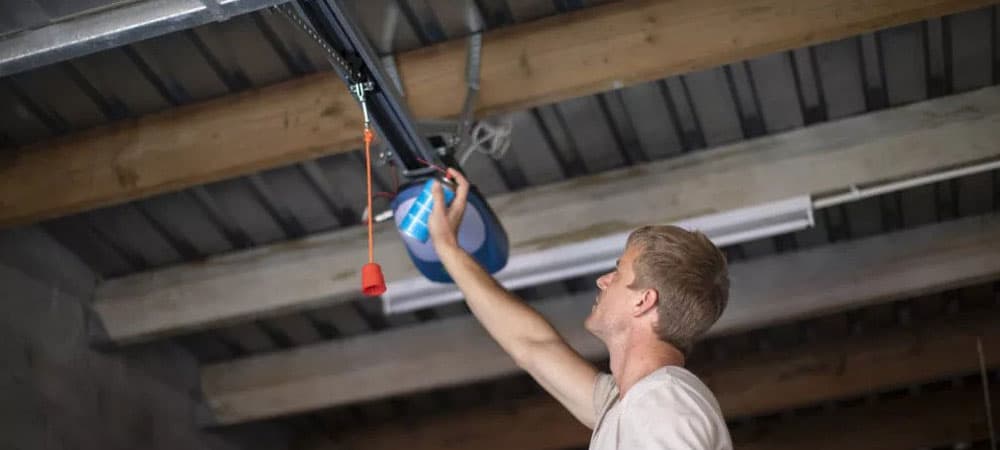
Garage door opener repair
Stripped gear kits, logic boards, limits and force settings, trolleys and remotes. What is worth repairing, and what is the door pretending to be the opener.
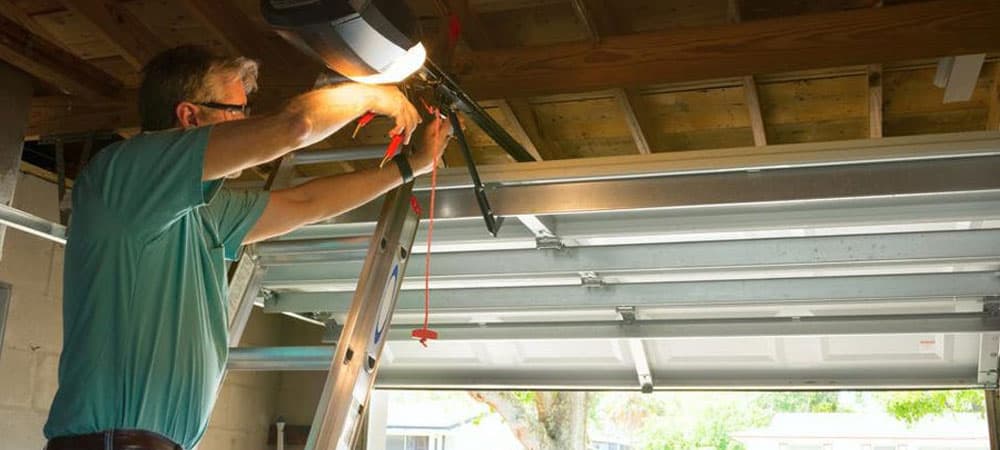
Garage door safety sensors
Garage door safety sensors: the door starts down and reverses, or the opener light blinks. What the photo eyes are telling you, and when it is only alignment.
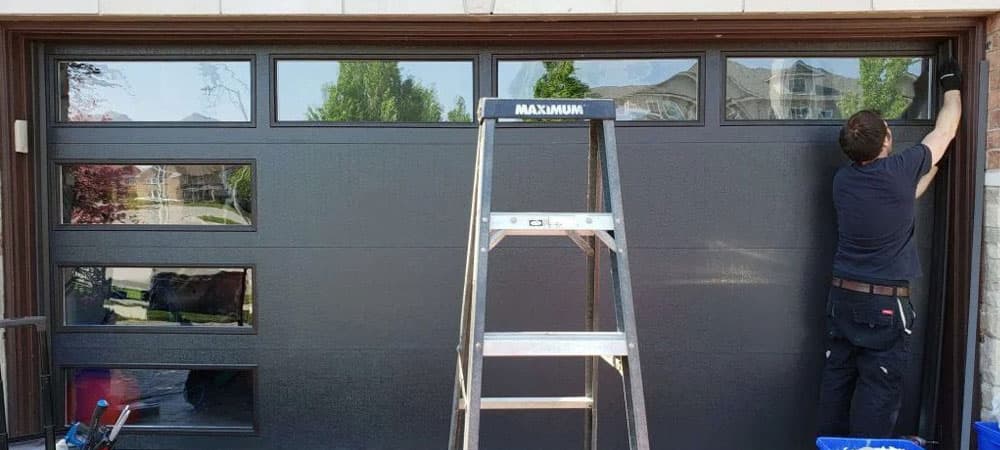
Garage door spring repair
Broken garage door springs? We replace torsion and extension springs safely and professionally to get your garage door working properly again.
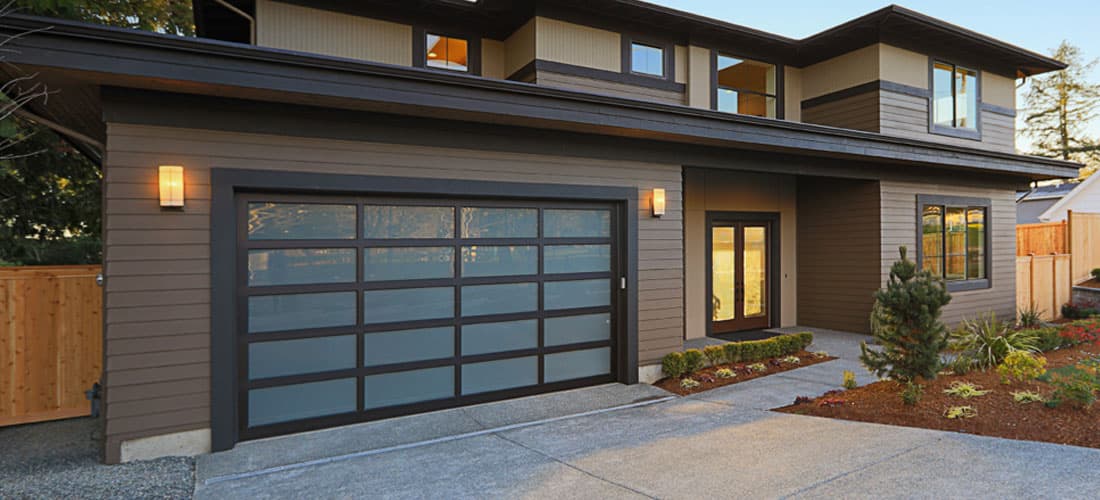
How a garage door opener is installed
Learn how a garage door opener is installed step by step. Tools, rail sizing, mounting, wiring, and the safety reverse test. Protech Garage Doors serves Ottawa and the GTA.
Talk to Protech Garage Doors today
Call (613) 845-9950 at any hour, or email info@protechgarage.ca for a new-door quote with no rush.