
How long garage door springs last, and what a Canadian winter takes off the count
A standard spring is built for about 10,000 trips up and down. How fast a household spends them, and why the cold spends some for you.
A standard residential garage door spring is rated for about 10,000 cycles, and one cycle is the door going up once and coming back down. Garaga, the Quebec manufacturer whose doors we install, puts that at roughly six to seven years of normal use, and it names Canada's temperature swings as one reason the number is not higher.
The years are only a translation of the count, and the count is the thing that runs out, so a door that opens ten times a day can use up a spring in under three years while one that opens twice a day can run past ten.
Counting your own cycles
Every time the door goes up and comes down is a cycle, whatever the reason: the drive to work, the drive home, the bins on collection night, the shovel in January, the kids who come in through the garage because it is closer to the kitchen. Garaga's article on why springs break puts the average household at around 1,500 cycles a year, a little over four a day.
| Times the door opens and closes a day | Cycles a year | A 10,000-cycle spring lasts about |
|---|---|---|
| 2 | 730 | 13.7 years |
| 3 | 1,095 | 9.1 years |
| 4 | 1,460 | 6.8 years |
| 6 | 2,190 | 4.6 years |
| 8 | 2,920 | 3.4 years |
| 10 | 3,650 | 2.7 years |
Read the top rows as a ceiling. The rating is what the steel is designed for when the spring matches the door and stays in good condition. Rust and cold spend cycles faster than the arithmetic does, and so does a door that has grown heavier than its springs.
Garaga's average of 1,500 a year lands on the four-a-day row, which is about where its six to seven years comes from.
Why the Canadian figure is lower
The figure quoted most often for this question is seven to ten years, which works out at roughly three to four cycles a day. Garaga's shorter figure comes with its reasons. Among the causes of breakage on its springs page are extreme cold and temperature swings, where "the metal contracts and expands, causing fatigue over time", and sudden changes "like a cold snap, putting stress on the steel".
It also lists moisture, snow and road salt, with rust "often accelerated by winter road salt and slush."
Rust costs more than it looks. DASMA, the Door and Access Systems Manufacturers Association, says in its technical data sheet on spring cycle life that rust "reduces the effective area of spring wire, which in turn reduces its overall strength", and that it leaves corrosion pits "from which fatigue cracks can accelerate and reduce cycle life."
A spring does not have to look rotten to have lost part of its rating.
Ottawa supplies the snow. Environment and Climate Change Canada's 1991 to 2020 climate normals for Macdonald-Cartier airport count 62.3 days a year with measurable snowfall, 16 of them bringing 5 cm or more. On each of those days a car rolls into the garage carrying slush and road salt, and it melts under the springs.
Garaga's spring article adds a threshold for the cold itself: where winter regularly dips below minus 25, the steel can become brittle and snap. How often Ottawa has gone that low in the last ten winters is counted on the Ottawa spring repair page. A spring near the end of its count has the least margin left for a night like that.
Torsion springs outlast extension springs
Garaga's comparison is short. Torsion springs, mounted on a shaft above the opening, "last longer than extension springs", and they are its choice for heavier, insulated or wider doors. Extension springs stretch along the tracks on each side and have a shorter lifespan "since they stretch and contract more with each use."
Garaga also lists them as not used on a door over 8 feet wide, so on its terms a 16 foot double is a torsion door, and extension springs belong to lighter single doors, often older ones.
How each kind is fitted, and why winding either one is not a homeowner job, is covered under garage door spring repair and replacement.
How often should you replace garage door springs?
When they are worn, rather than on a date. Garaga's springs page puts it plainly: "You can't predict the exact moment a spring will snap, but regular inspections help spot warning signs like rust, gaps, or unusual noises." It recommends a professional inspection once a year, and replacing both springs together on a two-spring door so the door stays balanced.
New springs do not mean the door is finished. DASMA's data sheet notes that spring cycle life "may not necessarily coincide with door cycle life", and a door's own cycle life is tested separately, under ANSI/DASMA 109. A sound door with worn springs needs new springs and nothing more.
When the springs are one of several parts wearing out at once, the guide on whether to repair or replace the garage door sets out where a repair stops paying.
How to tell if garage door springs are worn out
A spring exists to make the door weigh almost nothing. Garaga puts a typical single door at around 150 lb and says a well-balanced one should take only 8 to 10 lb to lift by hand. Most signs of a worn spring are that small number creeping up.
| What you notice | What it points to | Whose guidance |
|---|---|---|
| The door feels heavy with the opener disconnected | The springs no longer carry the weight they were sized for | Garaga |
| Lifted halfway by hand, it will not stay put | The counterbalance is off, usually at the springs | Garaga |
| Left fully open, it creeps back down over time | Too little torque on a torsion spring | DASMA TDS 190 |
| A gap or visible stretching in the coil | A broken or tired spring | Garaga |
| Coils scraping against each other, or the spring snaking | The wrong stretch on a torsion spring, from the winding or from the shaft moving side to side | DASMA TDS 190 |
| Clanking as the springs work | Dry springs, which lubrication quietens | Garaga |
| Rust on the coils | Lost wire section, and pits where cracks start | DASMA TDS 190 |
| The opener strains, or the door opens unevenly | The motor is lifting weight the springs should be carrying | Garaga |
The halfway test comes from Garaga's maintenance tips: pull the release, usually a red cord, to disconnect the opener, then move the door by hand about halfway up. If it does not stay put, the springs are out of balance. Chamberlain's version of the test starts with the door closed before the release is pulled, so that a door with a broken spring is never released from the open position.
Garaga's advice for a door that fails the test is short: avoid DIY adjustments, because the springs are under high tension.
Should you spray WD-40 on a garage door spring?
No. Garaga's spring article is direct: "make sure not to use a degreaser, like WD-40." Its springs page asks for an oil-based lubricant on springs, hinges and rollers at least twice a year, and keeps silicone for the weatherstripping.
The method in the article is old-fashioned. It uses the same grade of petroleum-based motor oil that goes into a car's crankcase, applied with a rag all around the springs, with the excess wiped away, once as overnight freezes begin and again when they end.
Garaga's maintenance tips also mention a spray lubricant sold by garage door dealers for coating the springs, and white lithium grease for an opener's chain or screw, which is a separate job.
DASMA says the same in general terms: lubricating springs as the door manufacturer's instructions require "will help to maximize spring cycle life." The silicone spray often suggested for springs belongs, on Garaga's instructions, on the seals, and the garage door weather stripping guide covers those.
What does it cost to replace a garage door spring?
There is no fair average, and Garaga's own springs page gives none. It says the cost "isn't one-size-fits-all" and "varies by door type, spring system, and local installation rates." On a given door, these are what move it:
| What changes the job | Why |
|---|---|
| One spring or two | On a two-spring door both are replaced together |
| Torsion or extension | Different springs, different hardware and a different fitting |
| The weight of the door as it hangs today | Garaga matches a spring to within 5% of the door's weight, so foam, glass or a heavier replacement door changes the spring |
| A standard or a 25,000-cycle spring | A longer rating is a different spring |
| What else has worn | Garaga has rollers inspected twice a year and replaced every seven years or so |
| Whether the opener was run against a broken spring | The opener may need its own repair |
A quote follows a look at the springs, the cables and the door itself.
Longer-rated springs for a door that never rests
Garaga notes that springs with a 25,000-cycle life expectancy are available. On a door that runs eight times a day, that is the difference between about three and a half years and about eight and a half. High-cycle springs make the most sense where the garage is the main way into the house.
They still have to be sized to the door, so the choice is made when the springs are replaced rather than added later.
How long do garage door openers last?
Longer on a door whose springs are doing their job. Garaga's maintenance tips put it in one line: "If your garage door is not properly balanced, the garage door opener will have to work harder, and it won't last as long." A spring that has gone soft passes part of the door's weight to the motor every time the door moves.
Age has one hard line. Since 1993, openers made in the US and Canada have had to include two reversal systems, one that reverses the door when it meets resistance and the photo eyes near the floor, and Garaga's advice for an opener made before then is to replace it rather than maintain it.
The year is on the sticker on the motor unit, marked MFG Date. What else goes wrong inside the motor is on the opener repair page.
Having the springs looked at
Protech Garage Doors is a Garaga dealer and our technicians are certified. A spring check is the yearly professional inspection Garaga recommends, and it is the visit most likely to find a worn spring before it breaks.
Call the Ottawa branch at (613) 845-9950, where the line answers around the clock, or send the contact form and say whether the springs sit on a shaft above the opening or along the tracks. The branch that covers your address is on the same contact page. If the door is heavy, noisy or creeping down, leave the opener unplugged until someone has looked at it.
Questions people ask
Short answers to what comes up most often.
Why did my garage door spring break after only three years?
At nine or ten openings a day, a 10,000-cycle spring is spent in about three years, and a household that uses the garage as its front door gets there easily. Garaga names two other causes it sees often: a spring that was never matched to the weight of the door, and rust from damp, slush and salt.
A manufacturing defect is the rare one, and Garaga says it typically shows up as the last ring at the end of the spring breaking.
What happens when a garage door spring breaks?
Garaga lists a loud bang or snapping noise from the garage among the signs. After that the door is too heavy to lift, because the load the spring was carrying now falls on whoever or whatever tries to raise it, the opener included. Stop using the door, unplug the opener, keep people and cars out from under it, and have the springs replaced.
Does leaving the garage door open wear out the springs faster?
It can. DASMA's guidance on spring cycle life says a door left open for long stretches on a regular basis exposes its springs to more variation in temperature, moisture and air quality. Its advice for doors in climates with extreme cold or frequent precipitation is to keep them closed where possible. A door left up through a snowy afternoon is that case.
Can I adjust a garage door spring myself?
No. Garaga's advice is to avoid DIY adjustments because the springs are under high tension. DASMA describes the installer's side: too much torque on a torsion spring strains the rest of the counterbalance and endangers whoever applies it, too little leaves the door drifting down, and the number of turns comes from the door manufacturer's instructions. Adjusting a spring is part of fitting one.
How long do garage door rollers last?
Garaga's maintenance tips say rollers, steel or nylon, should be inspected twice a year and replaced every seven years or so, sooner on a door used many times a day. They are usually looked at on the same visit as the springs, since both wear with every cycle.
Where to go from here
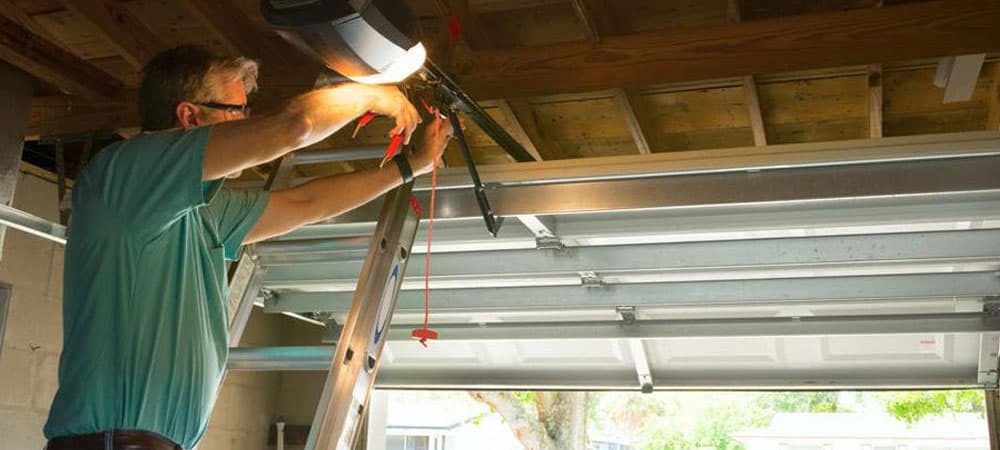
Garage door spring repair
Broken garage door springs? We replace torsion and extension springs safely and professionally to get your garage door working properly again.
Garage door parts
Springs, cables, drums, rollers, hinges, brackets, seals and opener parts. What is on the truck, what is matched to the door, and what is not a DIY part.
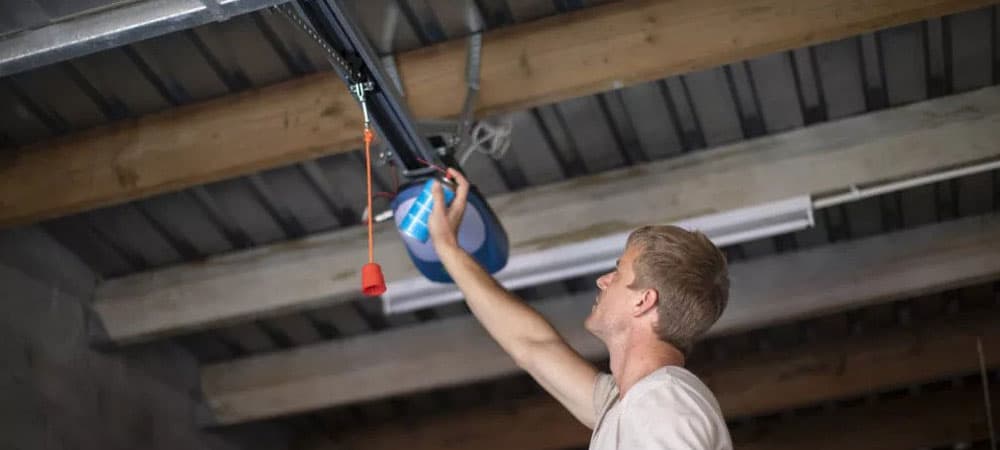
Garage door opener repair
Stripped gear kits, logic boards, limits and force settings, trolleys and remotes. What is worth repairing, and what is the door pretending to be the opener.
Garage door problems
Match the symptom to the cause: a bang and a heavy door, a crooked door, a door that reverses, an opener that hums. Then go to the page that covers that fault.
Talk to Protech Garage Doors today
Call (613) 845-9950 at any hour, or email info@protechgarage.ca for a new-door quote with no rush.