
Repair or replace your garage door? How to decide, fault by fault
Springs, cables, rollers, openers and photo eyes are parts. Rot, rust that has gone through and a second damaged section are the door. How to tell which one you are looking at.
Repair the door when what has failed is a part, and replace it when what has failed is the door. Springs, cables, rollers, hinges, the opener, the photo eyes and a single dented section on a model that is still made are all repairs, and a sound door on new parts runs the way it did.
Rot, rust that has gone through the steel, two or more damaged sections, sections nobody makes any more and a safety problem no part will cure are the cases for a new door. So is a door with no insulation on a garage that is now heated.
The line between one damaged section and two comes from Garaga, the Quebec manufacturer whose doors we install. Its panel replacement page says a single section in Canada typically costs about 30 to 40% of the price of a new garage door.
One section is a repair. Two put the bill at 60 to 80% of a new door, and what you have at the end is still the old door, with its old springs, rollers and seals.
Is it cheaper to repair or replace a garage door?
For one failed part, a repair is cheaper by a wide margin. HomeStars, the Canadian home services review site, has a rule of thumb that a repair is usually the better spend when the damage is limited to one panel, a spring or a cable on a door under roughly ten years old.
Replacement makes more sense, it says, when repairs approach half the cost of a new door. Garaga's section figure arrives at the same place from the other direction: one section is about a third of a door, and two are most of one.
Repair stops being cheaper on a door that keeps needing things. Its springs, cables and rollers were all fitted on the same day, and they run out within a few years of each other. Garaga rates a standard spring at about 10,000 cycles, roughly six to seven years of use, and its maintenance tips have rollers replaced every seven years or so.
A door in its second decade that has needed a spring, then a cable, then rollers is wearing out on schedule, because all of its hardware is the same age.
The faults that are repairs
None of these ends a door on its own. Each one is a part that wears out or gets knocked out of line, and it comes off and goes back on without anyone touching the sections.
| Fault | What gives it away | Why it is a repair |
|---|---|---|
| Broken spring | A bang from the garage, then a door far too heavy to lift | Springs wear out on a set number of cycles. The spring lifespan guide turns that count into years |
| Snapped or slipped cable | A cable hanging loose, or the door lower on one side | Cables are replaced as a pair on a closed, clamped door. The guide to a snapped garage door cable covers what to leave alone until then |
| Worn rollers | Grinding, a jerky run, a roller climbing out of the track | Garaga has rollers inspected twice a year and replaced every seven years or so |
| Bent track, loose hinges | A door that binds partway or sits crooked in the opening | Both are bolted on and replaced as parts |
| Opener faults | The motor hums and the door stays put, or it stops short | A stripped gear or a travel limit that needs resetting is work on the opener, not the door |
| Photo eyes | The door starts down and goes straight back up | Usually alignment. Garaga's test is to close the door and pass a leg through the beam: it should reverse |
| Bottom seal | Daylight, snow or water under a closed door | Garaga says to replace a brittle or cracked bottom seal right away. It is a strip of rubber |
| One dented section | A crease from a bumper, a ball or a snowblower | One section, if the model and colour are still made |
Two items on that list look like reasons to replace and are not. An extension spring door with no cable running through each spring needs the cables, not a new door: DASMA, the Door and Access Systems Manufacturers Association, says on its garage door safety page that an extension spring needs "a safety cable that runs through the spring and secures to the wall or ceiling at each end."
And a door that has gone heavy is usually a spring. Garaga's balance test is to pull the release, usually a red cord, and lift the door by hand about halfway: a door in balance stays where you leave it. Chamberlain, the opener maker, says to pull the release only with the door fully closed, so start the test from there.
The signs that point to a new door
Rot in a wood door
Wood is the one material where age turns into structural damage rather than wear. Amarr, the American door maker, tells owners of wood doors in its article on garage door lifespan to check them regularly for rot and damage and to repaint every few years, and Garaga's comparison of wood and metal notes that a wood door "requires regular maintenance from its owner."
Rot usually shows first in the bottom rail, where the door meets meltwater on the slab. Paint and sealant protect sound wood, but they put no strength back into a rail that has gone soft, and once rot has gone through more than one section the door is finished.
Rust that has gone through the steel
Surface rust on a steel door is a finish problem. Rust that has gone through is a door problem. Amarr's guidance on repair or replacement warns that steel doors exposed to rock salt or ice melt can rust, and asks owners to wash them with soap and warm water through the winter.
The bottom section goes first, because it stands in the slush every car drags in. Once the steel along the bottom edge has perforated, the bottom seal has nothing solid to hang from. A single rusted bottom section can be swapped on a door that is still made.
When the rust has reached the section joints, or the ends where the hinges are bolted on, the door is past a section swap. What road salt does to the bottom of a door here, and which of the city's doors are due, is covered under garage door replacement in Ottawa.
Two or more damaged sections
At Garaga's 30 to 40% a section, two sections cost most of a new door, and the door keeps every worn part it had. A car that hits a door rarely stops at one panel, either. It bends the track, pulls hinges out of the steel and can leave the door out of square in its opening.
Sections nobody makes any more
A section can be replaced only if someone still makes it in that profile, width and colour. Garaga's own list of the drawbacks of a panel repair starts with the match: a new panel may not match because the existing sections have faded or worn.
Amarr adds that a door over 15 years old that is not working properly may be due for replacement, because repairs on older doors often cost more than a new door, and it puts that down to "the limited availability of parts" and newer opener designs.
Before asking about a section, find the label. On a Garaga door, the serial number is on a small sticker on the inside of the door, at the lower right corner of the section closest to the ground.
With that number, a dealer can say whether the section is still in production and in which colour. A door with no label and a discontinued profile is a door with no replacement sections.
A safety problem no part will fix
Some doors fall short in a way no single part cures. DASMA's standard for the joints between sections, DASMA 116, came out of finger injuries between door sections and took effect on July 1, 2001, according to DASMA's history of the standard. It requires a residential door to have either pinch-resistant joints between its sections, or lift handles inside and out.
DASMA's safety page says that a door without pinch-resistant joints should have lift handles or gripping points on both sides. Handles can be added to an old door. The joints cannot.
That date matters in Ottawa because of how old the houses are. Statistics Canada's 2021 census counts 289,175 of the city's 407,250 occupied homes as built before 2001, about seven in ten. Plenty of them have no garage, and plenty of garages have had a new door since, but any of those homes still on its original garage door has a door older than the standard.
The opener has its own date. Garaga's opener maintenance article notes that since 1993, openers made in the US and Canada must carry two reversal systems: one that reverses the door when it meets resistance, and a pair of photo eyes about six inches off the floor.
Its advice for an opener made before 1993 is to replace it rather than maintain it, and the year is on the opener's sticker, marked MFG Date. The fix there is a new opener, and the door can stay.
How age and insulation change the answer
Age
Age on its own does not end a door. It changes the odds on the next repair. Amarr's 15-year line is about a door that is over 15 and not working properly, and Garaga's list of the drawbacks of a panel repair includes that it may only be a short-term solution on an older door.
The practical test is what else is near the end of its count. A 16-year-old door with a broken spring, its original rollers and a bottom seal gone hard needs three repairs, one after another, on hardware of the same age. That is when a quote for a new door belongs beside the quote for the spring.
Insulation
Insulation is the one thing a repair never adds. Garaga's panel page lists it among the drawbacks of a panel repair: repairs don't improve insulation or energy efficiency, "which is important in Canada's climate." Amarr says there is no easy repair for replacing a door's insulation.
So a single-skin steel door on a garage that is now heated, or that has a bedroom above it, is a replacement question even when nothing on it is broken.
Whether insulation earns its cost depends on the garage more than the door. On a detached garage nobody heats, it buys a stiffer and quieter door rather than a warmer one. The guide to insulated garage doors works through attached, detached and a room above, with Ottawa's winter numbers and what the R-value printed on a door actually measures.
What's the life expectancy of a garage door?
Garaga's figure, in its answers to the questions dealers hear most, is that a 1 3/4 inch (45 mm) door injected with polyurethane foam "should last over 20 years", based on the type of construction and the quality of the components. Amarr gives figures by material.
| Door | How long it lasts | Whose figure |
|---|---|---|
| 1 3/4 inch steel, injected polyurethane | Over 20 years | Garaga |
| Single-layer steel | About 15 to 20 years | Amarr |
| Triple-layer steel | 25 to 30 years | Amarr |
| Aluminum | Up to 30 years, with proper care | Amarr |
| Wood | No year figure; checked regularly for rot and repainted every few years | Amarr |
The door outlives its moving parts. Garaga's springs page puts a residential spring at around 10,000 cycles, roughly six to seven years depending on use, so a door that reaches 20 years will have needed new springs two or three times along the way.
That is the door working as designed. DASMA's data sheet on spring life makes the same distinction: spring cycle life "may not necessarily coincide with door cycle life."
What a replacement involves
A replacement takes the old door out and fits a new one to the opening, in this order.
The installer measures the opening in the wall, not the old door. The width and height of the opening, the headroom above it, the side room beside it and the depth behind it decide which doors will fit.
The old door comes down under control. Its springs are unwound first, because they are holding the door's weight, and they leave with it: springs are sized to the weight of the door they hang on and fit nothing else.
The track usually goes too. DASMA's safety page warns that an old track may not fit a new door, "depending on the thickness of your sections, the weight of your door, the headroom required, the location of the garage door opener, and other considerations."
The new door is hung, its springs are matched to its weight, and it is balanced and run by hand before the opener goes back on. An insulated door weighs more than a single-skin one, so the opener is checked against the new weight.
HomeStars' advice is to keep an existing opener if it has photo-eye sensors and enough lifting power for the new door, and to budget for a new one if it is over 10 to 15 years old or has no photo eyes.
HomeStars puts a straightforward replacement on a standard opening at three to five hours, including taking out the old door.
Taking away the old door is usually in the price, HomeStars says. The opener is usually quoted separately.
In Ontario, the contract itself has rules. The province's guide to your rights when starting home renovations or repairs says a contract worth more than $50 must be in writing, the final price cannot be more than 10% over the original estimate unless you agree to new work or a new price, and a contract signed in your home comes with a 10 calendar-day cooling-off period.
A price on a door follows a measurement of the opening. On a repair call, ask for two figures at once: what the repair costs, and what a new door would cost on that garage.
When the door is stuck today
A new door is made to the opening, so even when replacement is the right answer, a door stuck open in January still needs a technician today. Get it secured or repaired first, and make the bigger decision once the door is closed. Leave the opener unplugged if a spring or cable has gone, and keep people and cars out from under the door.
Having it looked at
Protech Garage Doors is a Garaga dealer, in business since 2009, and our technicians are certified. A repair visit looks at the springs, cables, rollers, track and sections together, which is what tells you whether this is the first repair on a sound door or the third on a tired one.
For garage door repair in Ottawa, the Nepean branch answers (613) 845-9950 around the clock. For garage door repair in Mississauga and the GTA, call (289) 975-9045, and for garage door repair in London, Ontario, call (226) 270-9715. The contact page has the form and shows which branch covers your address.
Questions people ask
Short answers to what comes up most often.
Can a new garage door go on the old tracks?
Sometimes, but plan on new track. Amarr says a new door of the same brand and a similar style can go on the old track, then warns that the new door's thickness and weight may call for an all-new track, because a track system cannot support a door that is even a few pounds heavier than the old one.
HomeStars notes that insulated doors are heavier, so moving from a single-skin door to an insulated one is the usual case for new track.
Can I replace a garage door myself?
DASMA recommends that trained door systems technicians install garage doors, and the springs are the reason. Taking the old door down starts with unwinding springs that hold its whole weight, and Garaga's maintenance guidance is never to adjust the spring system, the parts attached to it or the lifting cables yourself. Its maintenance tips say those high-tension cables have enough force to maim and kill.
Should both doors on a two-door garage be replaced at the same time?
If both are due, doing them together saves money. HomeStars lists replacing both doors of a two-door garage in one visit among its ways to save, since the two share one service call and one setup. If only one is failing, the other can wait, and the thing to check first is whether the same model and colour are still available so the two doors will match.
What should a garage door replacement quote include?
The door, the track, the springs, the labour, taking away the old door, and a decision on the opener. HomeStars warns that quotes from big-box retailers often leave out the opener and sometimes the installation itself, while garage door companies usually bundle the tracks, springs and labour, so it advises comparing quotes line by line rather than on the bottom line.
If the opener is staying, ask what the new door weighs.
Do I need a permit to replace a garage door in Ottawa?
Not for a new door in the same opening. The City of Ottawa lists "replacing doors or windows (provided they are in the same size opening)" among the projects that need no building permit. Widening the opening for a bigger door is not on that list, and the City withdraws its exemptions for designated heritage buildings and properties in a Heritage District Overlay.
For either case, the City's Building Code Services answers for the address.
Where to go from here
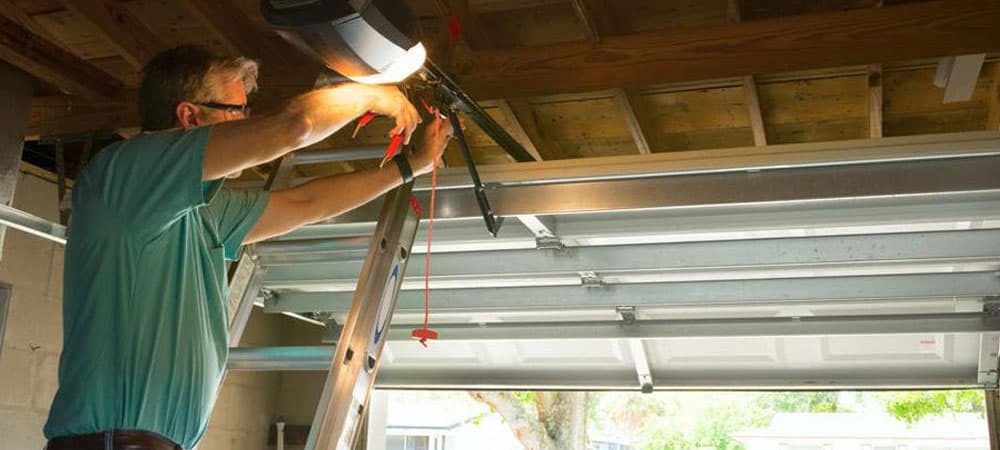
Garage door repair
Broken springs, cables, rollers, tracks, sensors, trims and any garage door opener problem. Fast, professional service when you need it.
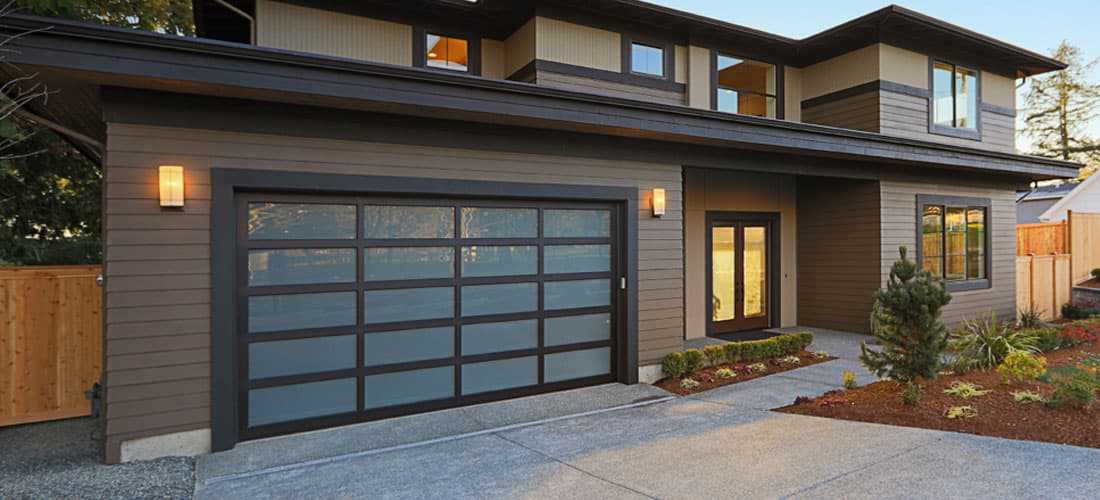
Garage door replacement
Panel damage, rust at the bottom section, repeated failures and an uninsulated door on a heated garage. The four cases where replacing beats another repair.
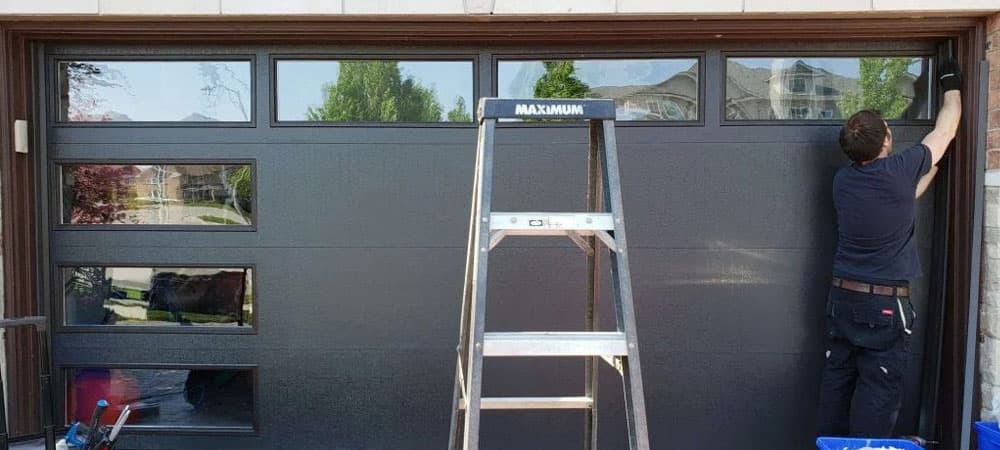
Garage door spring repair
Broken garage door springs? We replace torsion and extension springs safely and professionally to get your garage door working properly again.
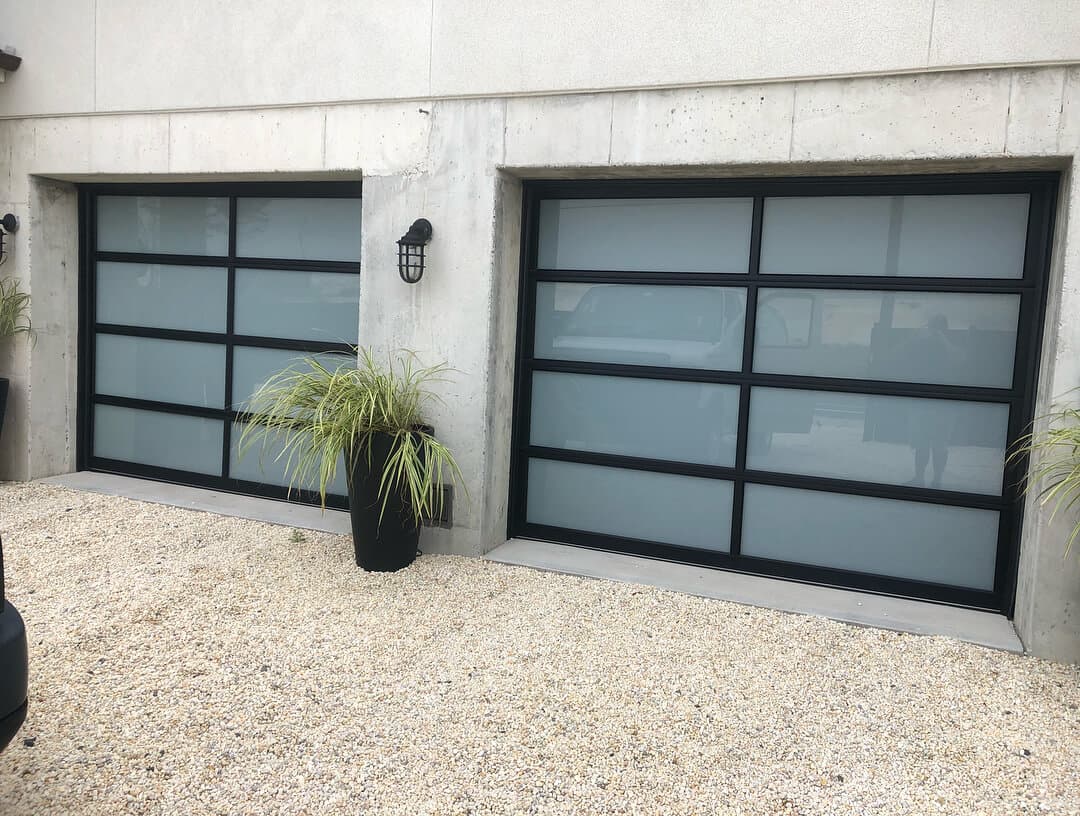
Garage door parts
Springs, cables, drums, rollers, hinges, brackets, seals and opener parts. What is on the truck, what is matched to the door, and what is not a DIY part.
Talk to Protech Garage Doors today
Call (613) 845-9950 at any hour, or email info@protechgarage.ca for a new-door quote with no rush.