
Garage door weather stripping: find the seal you have, then fix the right gap
Four seals, four ways to fail. Where the daylight gets in tells you which one to buy, and when to leave the seal alone.
A garage door can have four seals, and each one fails for its own reason. The bottom seal rides in a retainer along the bottom edge and meets the floor. Top-and-side seals are fixed to the frame. A threshold seal is glued to the slab, and joint seals sit between the sections.
A careful owner with a drill and a helper can replace the first two. Before you buy anything, close the door on a bright day, switch off the garage light and look for daylight. Where the light gets in tells you which seal to buy. Sometimes it tells you to leave the seal alone and look at the door.
The four seals and how to recognise yours
The bottom seal
Door maker Garaga says most doors under about twelve years old have a two-part bottom seal: a U-shaped insert that slides into an extruded metal or PVC retainer. Some doors have a one-piece seal instead. Raise the door to waist height and look up at the bottom edge.
Two channels, each gripping a T-shaped rib, means a T-style retainer. Action Industries, a seal manufacturer, specifies its T-end bulb seal with a 1/4 inch T and sells it in 1/2, 1 and 1-1/2 inch widths, so you need to match both the T and the width.
A single round tube hanging below the door is a bulb seal. Rounded beads locked into grooves on each side of the bottom edge is a bead profile, which some suppliers call J-type. A strip nailed straight to a wooden bottom rail has no retainer at all.
Top-and-side seals
The trade calls these stop moulding or perimeter seal. A rigid strip with a soft flap runs up both jambs and across the header. It is fixed to the frame, so the door can travel past it. Climaloc sells a heavy-duty vinyl version "screwed to the frame, on the outside of the garage door", and an aluminum strip with a rubber insert.
The threshold seal
This is a raised rubber or vinyl hump bonded to the concrete. Garaga lists it as the answer "when a sloped driveway prevents full contact with the door."
Joint seals between sections
Garaga calls these inter-panel seals or joint gaskets, and they are part of the door. Air coming through a closed joint points to the sections themselves, and a hardware store strip will not reach it.
Measure before you buy
Pull a short piece of the old bottom seal out of the retainer and take it to the store. Garaga also suggests photos of the door and a note of the seal's width and thickness. Then measure the width of the door opening.
Action Industries tells buyers to measure the opening rather than the old seal, because old vinyl stretches or shrinks. Order a little long and trim once the insert is centred.
While the old insert is out, look along the retainer. Bent sections, corrosion and channels packed with grit all stop a new insert sliding in or sitting flat. If the retainer has corroded through, replace it too.
What an Ottawa winter does to a garage door seal
Environment and Climate Change Canada's 1991 to 2020 normals for the Ottawa airport count 154 days a year with a low at or below 0 °C, and 76 days when the high stays at or below freezing. Roughly 78 days a year, then, the temperature crosses zero, and any water sitting at the threshold can thaw in the afternoon and freeze again by morning.
The same station averages 15.6 nights colder than minus 20 °C (8.1 of them in January), 231.9 cm of snow and 14 days of freezing rain or drizzle.
Cold stiffens the seal first. Natural Resources Canada's air-sealing guide warns that some weatherstripping products get hard, and less effective, in cold weather, exactly when you need them. A bottom seal that flexed in September can lie on the slab like a plastic ruler in January. So read the spec sheet before you buy.
Garaga publishes a cold rating for its TPE (thermoplastic elastomer) bottom seals: flexible and watertight down to minus 52 °C. The coldest reading in the Ottawa airport record, going back to 1938, is minus 36.1 °C. A seal sold with no cold rating gives you nothing to compare.
Ice, salt and the wrong lubricant
The seal also freezes to the slab. Snowmelt drips off the car, finds the door and bonds the bottom seal to the concrete overnight. Press the button on that door and the opener tries to rip the seal free, or pulls on the bottom bracket instead.
Keep packed snow and ice cleared from under the door. If the door will not start on a cold morning and the springs look fine, check the seal before you press the button a second time. Our stuck garage door page has the full check order.
Salty slush collects in the retainer channel all winter, and the grit it leaves can make an old insert hard to pull out in spring.
Lubricant matters as well. Garaga recommends a silicone-based lubricant on the bottom seal and warns that petroleum products harden PVC over time, so a general-purpose spray on a vinyl retainer shortens its life.
A worn seal also undoes what an insulated door is paid for. The insulated garage doors guide covers what the R-value on a door does and does not measure.
The lights-off check
Close the door, stand inside with the lights off, and read the gaps.
| What you see | What it usually means |
|---|---|
| Light along the whole bottom edge, evenly | The bottom insert is worn, flattened or too narrow. Replace it |
| A wedge of light at one end of the bottom | Put a level on the slab. If the floor dips there, a wider bulb or a threshold seal will close it. If the floor is flat, the door is sitting crooked |
| Light down the sides or across the top | The stop moulding is worn or has pulled off the jamb. Replace it, or reset it so the flap just touches the closed door |
| Light at a joint between sections | The door needs looking at, not a new strip |
| A draft with no visible light | Wait for a windy day and move a lit incense stick slowly along each seal. The smoke bends wherever air is moving |
The incense stick is the same trick NRCan suggests for finding air leaks in a house.
Gaps a new seal will not close
A new seal on any of these hides a fault and costs you twice.
The door stops short of the floor. Usually the opener's down travel is set too short. LiftMaster's own instruction, when a door stops on its test board instead of reversing, is to increase the down travel and test again. Once the door closes fully, the gap goes.
One side of the door hangs lower than the other. Uneven cable tension, or a cable that has come off its drum, leaves one corner high. Those cables hold spring tension, so this is a technician's job.
The slab has cracked, settled or lifted under the door. A wider bulb can cover a small dip, and a threshold seal suits a floor that stays put. Neither will keep up with a floor that moves.
The door has started dragging or reversing on the way down since the last cold snap. A frozen seal, a door that has gone out of balance or an opener with its force set wrong can all do that. Our garage door repair page covers what a technician checks on a service visit.
Why springs, cables and bottom brackets are not part of this job
Replacing a bottom insert or a strip of stop moulding never needs you near the springs, and you should keep it that way. DASMA, the door manufacturers' association, calls springs "arguably the most important and most dangerous part of your door". It says the cables running down to the bottom brackets "should be replaced only by a trained technician" because of the spring tension they carry.
Leave the bottom brackets on the lower corners bolted while the door is closed and the springs are wound.
If your gap turns out to be a cable, a spring or a crooked door, book garage door spring repair and let a technician set it.
After any change at the bottom of the door, test the safety reverse. LiftMaster's instruction is to lay a 2x4 flat on the floor under the middle of the door and close it with the opener. The door must reverse when it touches the board.
A new seal of a different width changes where the door meets the floor, and LiftMaster lists "any repair to or adjustment of the garage door" and "any repair to or buckling of the garage floor" among the reasons to repeat the test. If the door keeps failing it, stop using the opener and call a technician.
Check the door into the house as well
Seals on the overhead door keep out wind, snow and mice. Exhaust is stopped at the door between the garage and the house. Ontario Building Code Article 9.10.13.15 requires that door to be "tight-fitting and weatherstripped to provide an effective barrier against the passage of gases and exhaust fumes", with a self-closing device. While you are weatherstripping the garage this fall, check that door's seal and closer too.
When the gap is the door
If the check points to a crooked door, a cable, a spring, or a door that will not reverse on the 2x4, call Protech's Ottawa branch at (613) 845-9950. The line is open 24 hours. Tell us where the light gets in and what the door does as it closes. For anything that can wait, send the contact form.
Questions people ask
Short answers to what comes up most often.
What is the best weather stripping for garage doors?
Start with fit: the new bottom seal has to match your retainer's profile (T-end, bulb, bead or nailed strip) and its width. Then look at the cold rating. For an Ottawa winter, choose a seal whose maker publishes a low-temperature figure; Garaga rates its TPE bottom seals flexible to minus 52 °C. Keep petroleum lubricants off it.
Can you replace weather stripping on a garage door?
Yes. A bottom insert slides out of its retainer and a new one slides in. Garaga's method uses two people, one pulling the new insert through with locking pliers while the other feeds it, and it warns against stretching the seal tight. Stop moulding unscrews or pries off the frame. None of this involves the springs, cables or bottom brackets, and none of it should.
Where can I buy garage door weather stripping in Canada?
Home Depot Canada and online retailers such as Amazon.ca stock generic bottom and top-and-side seals. Garaga's replacement seals are ordered through Garaga dealers, and Garaga suggests bringing a sample of the old seal so the dealer orders the same profile. Wherever you buy, take the sample and the opening width. A seal one size off in the T or the width will not stay in the channel.
What is the best way to seal gaps around a garage door?
Find the gap first with the lights-off check. An even line of light at the bottom calls for a new bottom insert, and a wedge at one end over a sloping floor calls for a wider bulb or a threshold seal.
Light at the sides or top means new or reset stop moulding. If the door stops short of the floor or hangs crooked, have the door adjusted or repaired first.
Where to go from here
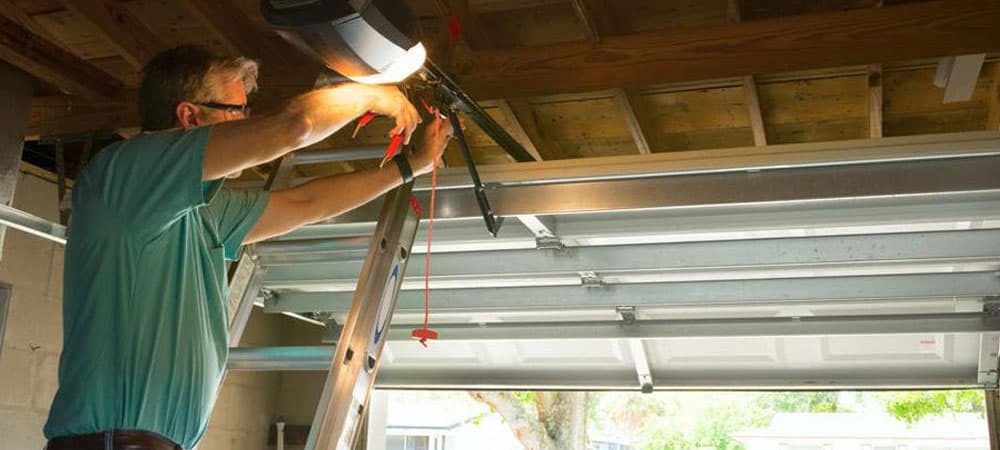
Stuck garage door
A door that will not move, or stops halfway. The check order that tells you whether it is the opener, the springs, the track or ice, before anyone touches it.
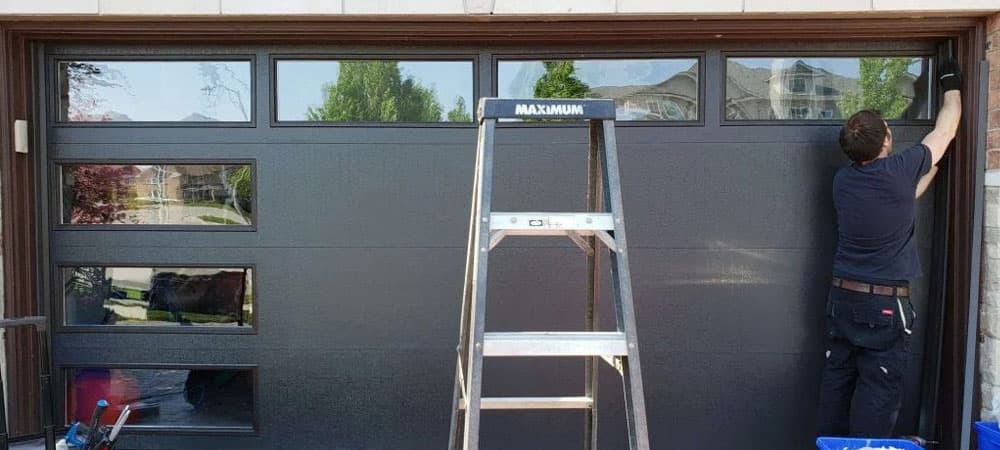
Garage door off track
Garage door off track or not moving properly? Protech can safely realign the door, repair damaged tracks, replace rollers and get it running smoothly again.
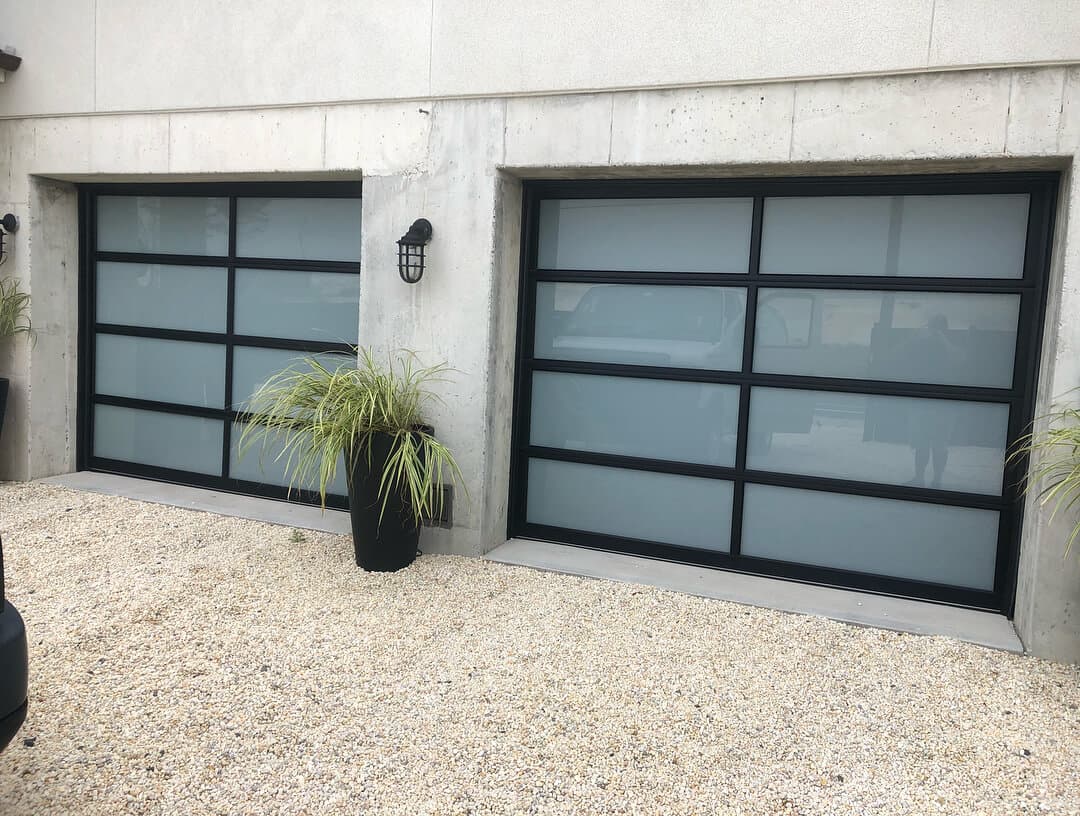
Garage door repair
Broken springs, cables, rollers, tracks, sensors, trims and any garage door opener problem. Fast, professional service when you need it.
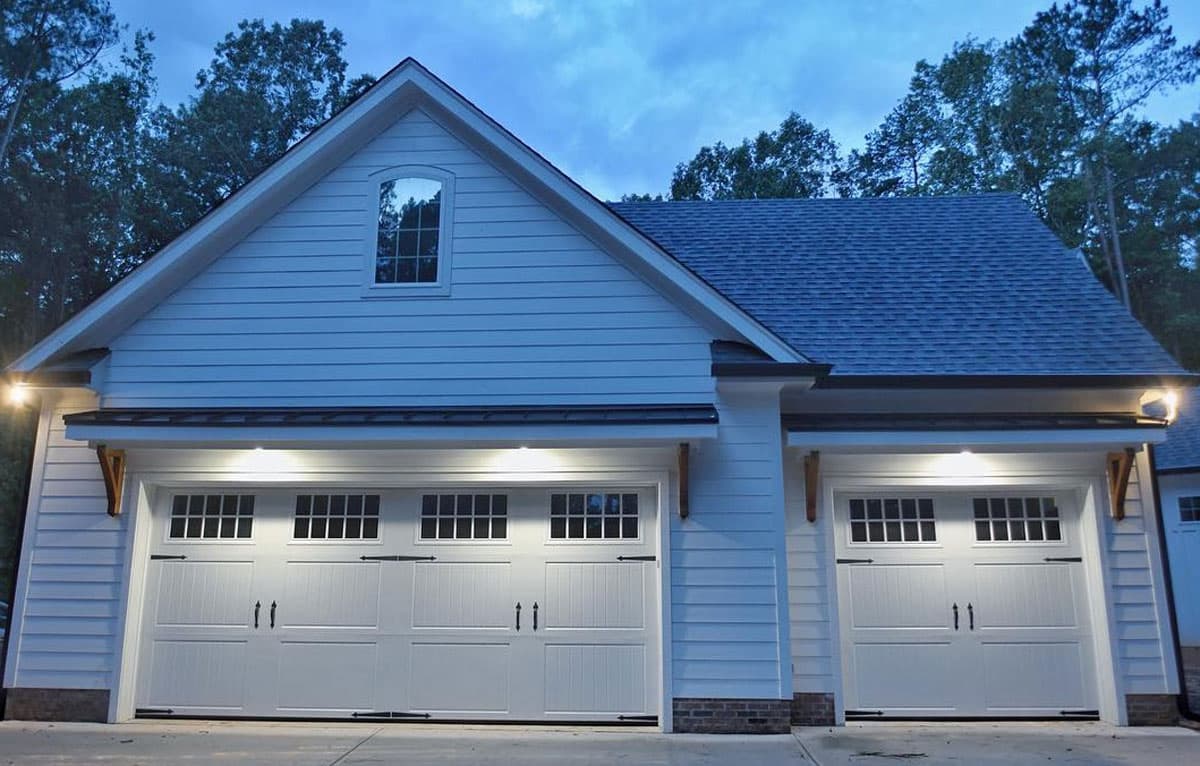
Garage door spring repair
Broken garage door springs? We replace torsion and extension springs safely and professionally to get your garage door working properly again.
Talk to Protech Garage Doors today
Call (613) 845-9950 at any hour, or email info@protechgarage.ca for a new-door quote with no rush.