
Garage Door Safety Sensor Repair
Two small units sit near the floor on either side of the opening, about six inches up, facing each other. One sends an infrared beam and the other receives it. If anything breaks that beam while the door is closing, the opener reverses. It is a legal safety requirement on every opener sold for decades, and it is also the single most common reason a door refuses to close. Most garage door sensor repair turns out to be alignment, a dirty lens or a pinched wire, and the lights on the two units say which.
Read the lights first
Each unit has a small LED. On most openers the sending side shows a steady amber and the receiving side a steady green, though the colours vary by brand. Two steady lights mean the pair can see each other. A receiving light that is off, dim or blinking means the beam is broken, misaligned, or the unit is not getting power.
The opener usually tells you as well. Most brands blink the light on the motor head a set number of times when the door will not close because of the sensors, and the count is printed in the manual.
The three things that are usually wrong
Alignment. The brackets are bolted to the track at ankle height, which is exactly where a bike, a snow shovel or a foot will nudge them. A few degrees is enough. The fix is loosening the wing nut, moving the eye until the light is solid, and tightening it again.
The lens. Dust, cobwebs, road salt film and condensation all scatter the beam. A dry cloth on the glass face fixes a surprising number of calls.
The wiring. The low-voltage wire from each eye runs back to the motor head, usually stapled along the wall and the ceiling. A staple driven through the insulation, a nick from a shelf bracket, or a terminal that has worked loose at the motor head will all read as a dead sensor even though the sensor is fine.
A pinched wire stops the whole door because openers are built to check. The United States federal standard for residential openers, 16 CFR 1211.8, has the opener confirm that its secondary safety device is present and working at least once on every close cycle. If the device is missing, or its wiring is open or shorted, a closing door has to open again, and an open door may not close more than 1 foot (305 mm) below the top of its travel.
When it is the sensor itself
Sensors do fail, and water is the usual reason: a unit mounted low in a garage that floods, or one that has taken years of snowmelt off a vehicle. Low sun straight down the opening at the right time of year will also swamp the receiver, which is a real effect rather than a fault, and moving the eyes or shading them solves it.
The controls can undo that protection too. In February 2023 Health Canada published a recall of LiftMaster myQ 889LM and 041A7928-3 control panels, sold from March to October 2022 on their own or packed with wall-mount jackshaft openers. Paired with an outside keypad, a panel could override the secondary entrapment protection if ENTER was pressed a second time within 60 seconds while something was in the way. About 19,260 were sold in Canada, and owners were told to contact Chamberlain Group for a replacement panel.
If the lights are steady, the lens is clean, the wiring is intact and the door still will not close, the fault has moved on to the opener: the close limit, the down force, or the logic board.
Where we do this
- Ottawa
- Mississauga
- London
- Brands installed and serviced
- Garaga, Amarr, Stanley, LiftMaster, Chamberlain, Genie
Related
Garage door safety sensor repair: what people ask
Short answers on what usually breaks, what a visit involves and what it costs to put right.
Why does my garage door close a few inches and go back up?
That is the sensor pair or the down force. If the opener light blinks while it happens, it is the sensors. If it reverses without blinking, the opener is hitting a resistance it thinks is an obstruction, which is usually a close-limit or force setting, or a door that is binding on the track.
Can I bypass the safety sensors?
They can be defeated and they should not be. They are the mechanism that stops a door closing on a child or a pet, and they are the reason a modern opener reverses at all. If the door will not close, the answer is to find out why the beam is broken rather than to remove the thing reporting it.
Can a garage door sensor be fixed, or does it have to be replaced?
Usually fixed, because the sensor itself is rarely what failed. Realigning a bracket, cleaning the lens or repairing a pinched wire needs no new part at all. A unit that has taken water, or one cracked by a car or a shovel, is replaced, and the replacement has to suit the opener, because sensors are not interchangeable between the Chamberlain family and Genie.
How long do garage door sensors last?
Many outlive the opener they came with. Where they fail early it is almost always water, physical damage from something in the garage, or a wire that has been pinched rather than the electronics giving out on their own.
How do I reset garage door sensors?
There is no reset button on the eyes themselves. What people mean by a reset is cutting power at the opener, either by unplugging the motor head or switching off its breaker, waiting about half a minute and restoring it. That clears a latched fault on the logic board. It does nothing for the cause. If the receiving light was off before the power cycle it will be off after it, because the beam is still broken, still blocked, or still not getting power down the wire. Use the power cycle to clear the fault, then fix what broke the beam. The steady light is the only confirmation that matters.
Will any garage door sensors work with my opener?
No. They look identical across brands and they are not interchangeable. Chamberlain, LiftMaster and Craftsman openers share a platform and their sensors generally swap between them. Genie runs its own system, Safe-T-Beam, which does not work on a Chamberlain-family opener and is not backwards compatible across every Genie generation either, because the older units used a different wiring arrangement from the current two-wire ones. The model number is on a label on the motor head, usually on the side or the back, and it is what decides which part fits. Buying on appearance is how people end up with two sensors that light up and an opener that still will not close.
Everything else we repair and install
Every service the branch nearest you can send a van for.
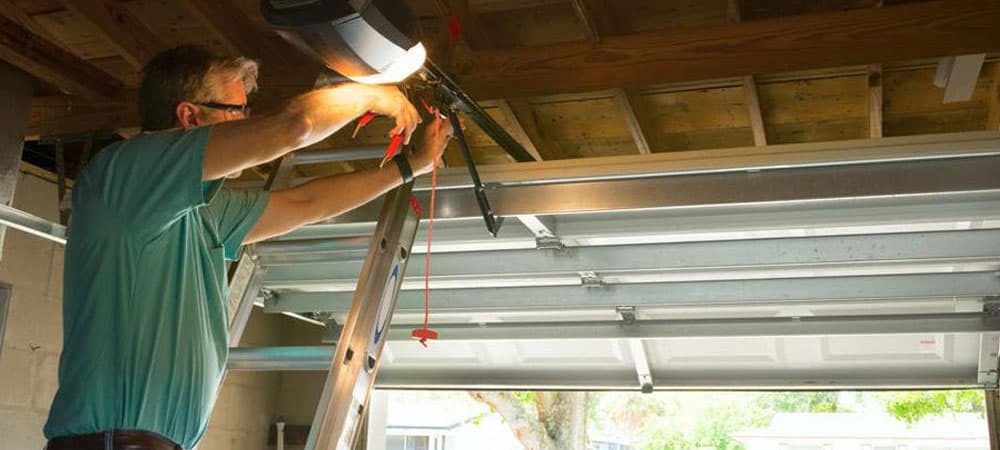
Garage door repair
Broken springs, cables, rollers, tracks, sensors, trims and any garage door opener problem. Fast, professional service when you need it.
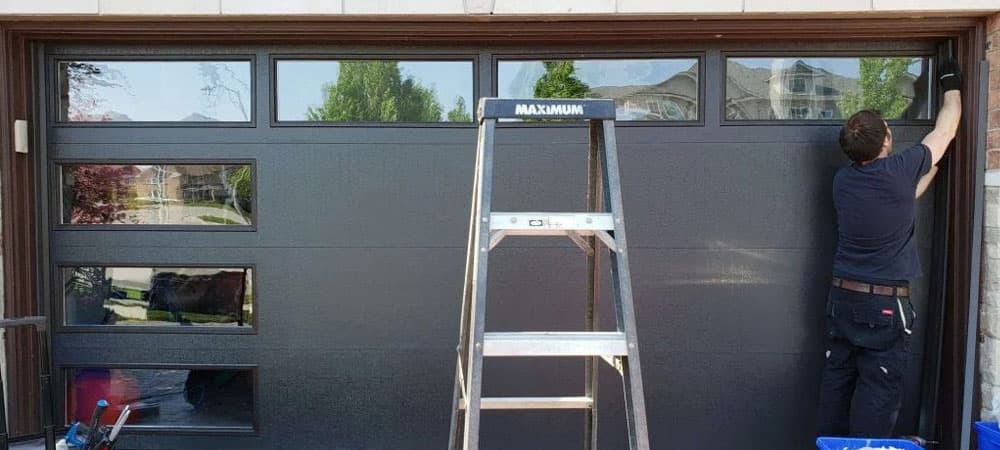
Garage door spring repair
Broken garage door springs? We replace torsion and extension springs safely and professionally to get your garage door working properly again.
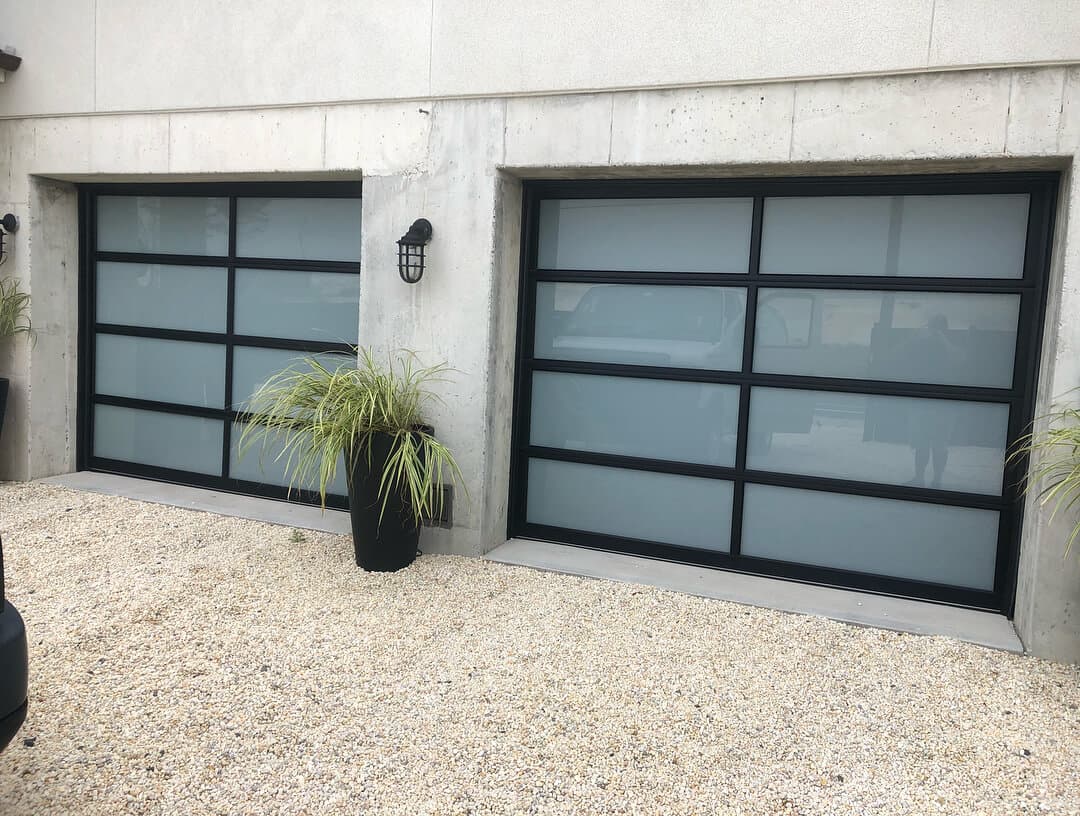
Garage door off track
Garage door off track or not moving properly? Protech can safely realign the door, repair damaged tracks, replace rollers and get it running smoothly again.
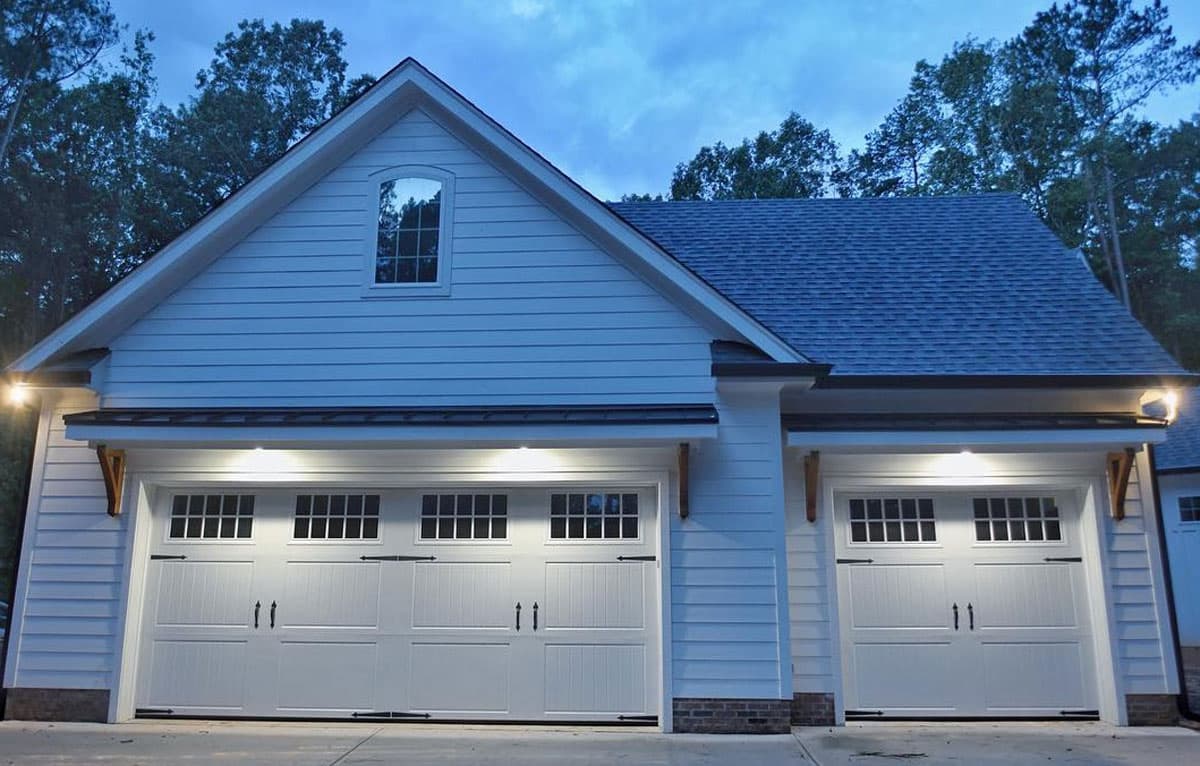
Garage door parts
Springs, cables, drums, rollers, hinges, brackets, seals and opener parts. What is on the truck, what is matched to the door, and what is not a DIY part.
Stuck garage door
A door that will not move, or stops halfway. The check order that tells you whether it is the opener, the springs, the track or ice, before anyone touches it.
Garage door problems
Match the symptom to the cause: a bang and a heavy door, a crooked door, a door that reverses, an opener that hums. Then go to the page that covers that fault.
Talk to Protech Garage Doors today
Call (613) 845-9950 at any hour, or email info@protechgarage.ca for a new-door quote with no rush.